
DESTINATION GUIDE
Athens, the Way I'd Plan It
An advisor's guide — opinionated, useful, and built for the version of the city that earns the trip rather than steals two days of it.
About the Destination
Athens is the city most travelers are passing through on their way to something else, and that's the framing problem. The standard Greek itinerary treats Athens as the obstacle between the airport and Santorini — fly in, see the Acropolis, eat in Plaka, fly out. Two days you wish you'd given to the islands.
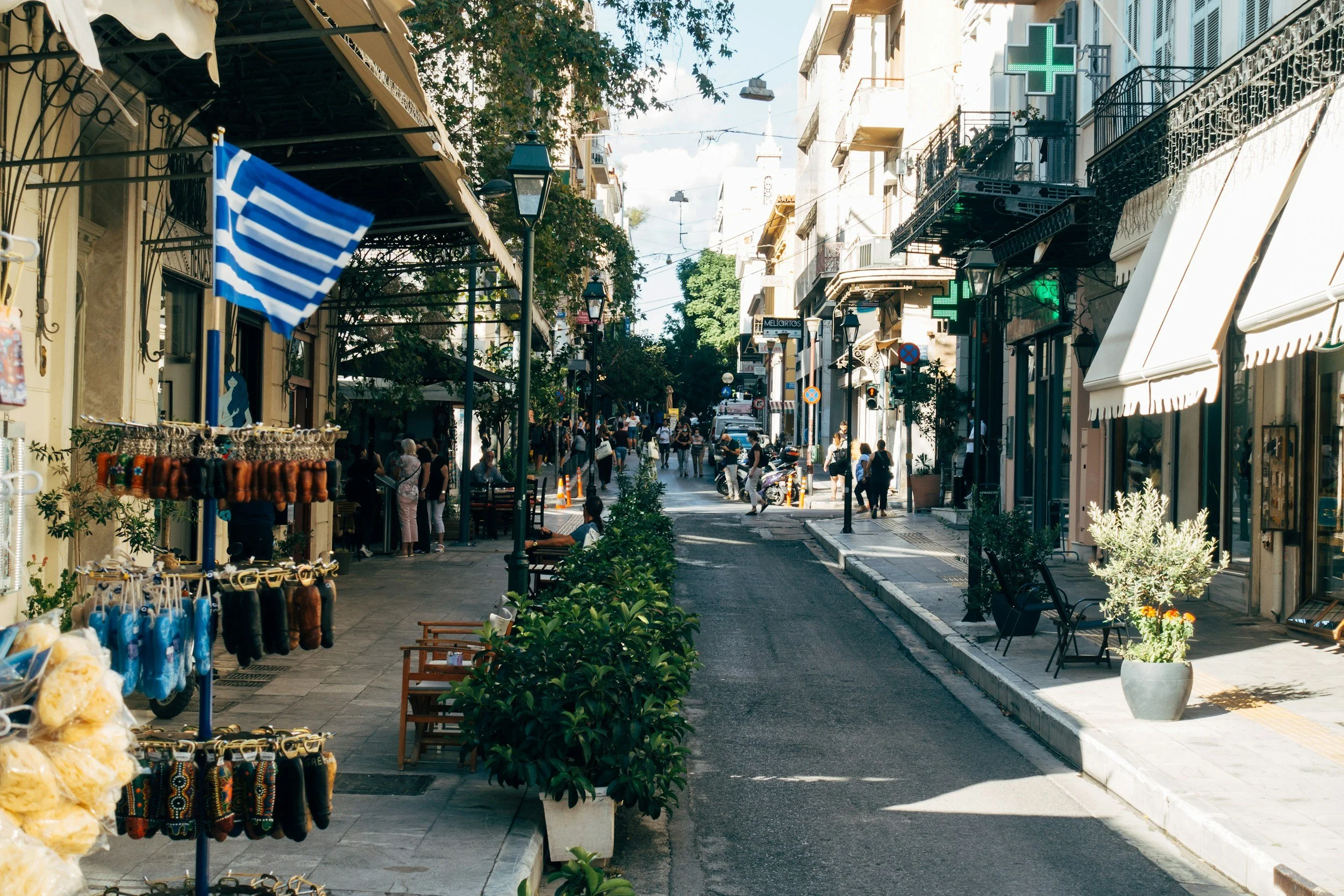
Done that way, it's a slog. Athens in summer is hot, dense, and loud. Pollution wreathes the Acropolis on bad days. Cars bleat among concrete high-rises. The standard tourist machinery — the multilingual menus in Plaka, the costumed photo ops — is precisely the version of the city that makes people want to leave.
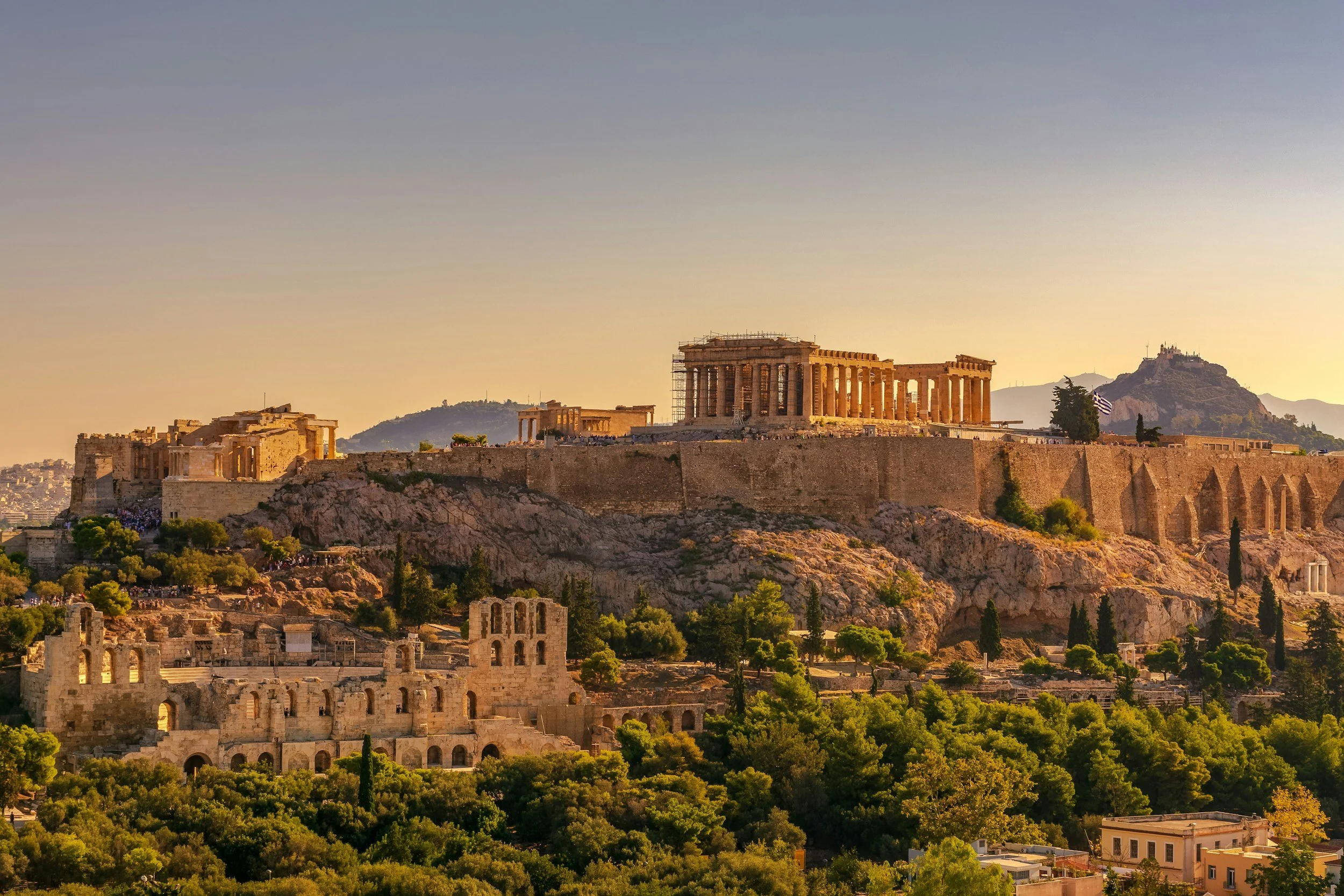
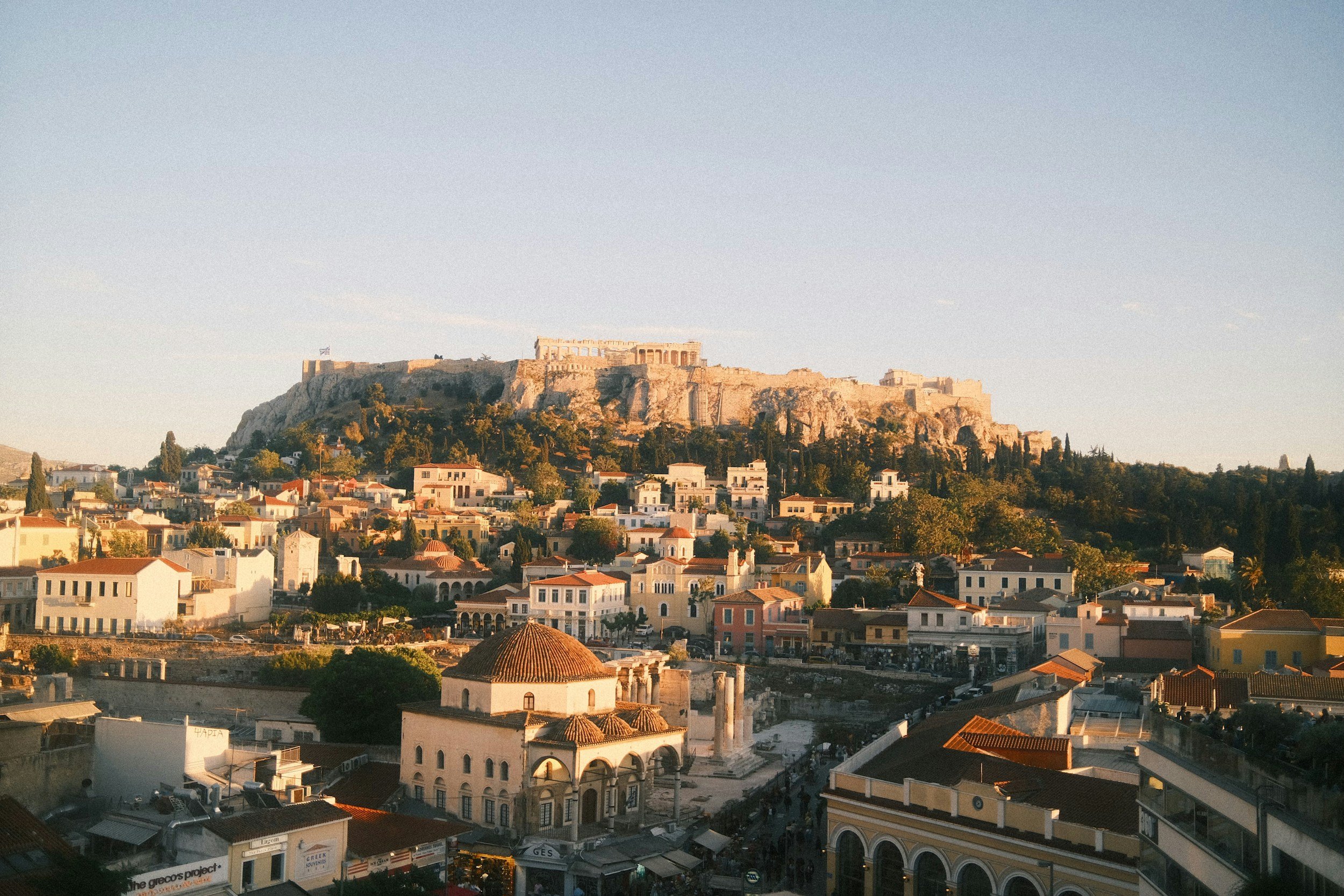
Done correctly, it's a different city entirely. Athens is the place where Western civilization started arguing with itself, and that argument is still going on around you in cafés and tavernas and at sidewalk tables that stay full until midnight. The neighborhoods reward walking. The food is better than the islands when you know where to eat. And the moment you stand on the Acropolis at the right hour and look out across the basin to the Saronic Gulf — that's the moment the trip becomes a Greek trip rather than a beach trip.
Most clients come to me asking about Athens in three contexts: as a one- or two-night pre-cruise stop on the way to a Greek-isles sailing, as the front half of a multi-island sweep (Athens → Santorini → Mykonos or Crete), or — much rarer, and the version I most want to plan for — as a standalone city long-weekend with day trips. Each one rewards a different shape of itinerary.
Here's how I think about it:
Best time to visit
April–early June and mid-September–October. The temperature is warm without being brutal, the light on the Acropolis is golden, and the worst of the cruise-and-tour-bus surge eases. Avoid mid-July through August — peak heat sits hard in the basin and the Acropolis is unpleasant by 10 a.m.
How long to stay
Two nights minimum if Athens is a transit stop; three nights ideal for a city-only visit. Add another two for day trips to Cape Sounion, Delphi, or a Saronic island hop.
Currency / Language
Euro. Greek is official; English is widely spoken in tourist-facing settings. Yamas (cheers) and efharisto (thank you) carry you a long way.
How to get there
Athens International Airport (ATH, also called Eleftherios Venizelos) is 27 km east of the city. Metro Line 3 runs to Syntagma in 40 minutes for a few euros, or a fixed-rate taxi runs about 40 euros. From cruise — Piraeus port is 10 km southwest, Metro Line 1 connects it to Monastiraki and Omonia, taxis are cheap.
One thing guides won't tell you
Greek meal hours. Lunch is 2–4 p.m. Dinner is 10–11 p.m. If you sit down for dinner at 7, you'll be the only ones in the restaurant and the kitchen won't be running yet. Plan accordingly — and use the early evening for a sunset hill walk or a cocktail with a view.
Why I Send Travelers Here
Because Athens, planned correctly, is the city that earns the rest of the Greek trip. It's the opening city of Rachel's Greek sabbatical — the trip that's been the most-read post on this site since it published — and it's the city that, when designed as a 48–72 hour exhilaration rather than a transit pause, becomes the memory that sets up everything else.
I send travelers here as the night-before before a Greek-isles cruise — Athens in the late afternoon, dinner with an Acropolis view, an early morning at the rocks before the heat, and then to Piraeus. I send them as the front half of a Greek-isles sweep that climaxes in Santorini or extends to Crete. I send the rare client a long weekend in the city itself, with day trips to Sounion or Delphi or an island hop into the Saronic Gulf.
Athens is also one of the most over-recommended and under-planned cities in Europe. The standard advice — "see the Acropolis, eat in Plaka, fly out" — gets the geography right and the experience wrong. Every recommendation below comes through the lens of how to shape Athens into the right amount of city for your trip, the hotel relationships I rely on, and a clear point of view about which neighborhoods are worth your time, which sites are worth waiting for, and which ones aren't.
Where I'd Anchor
Three neighborhoods cover almost any traveler's reason for being in the city:
-
Plaka
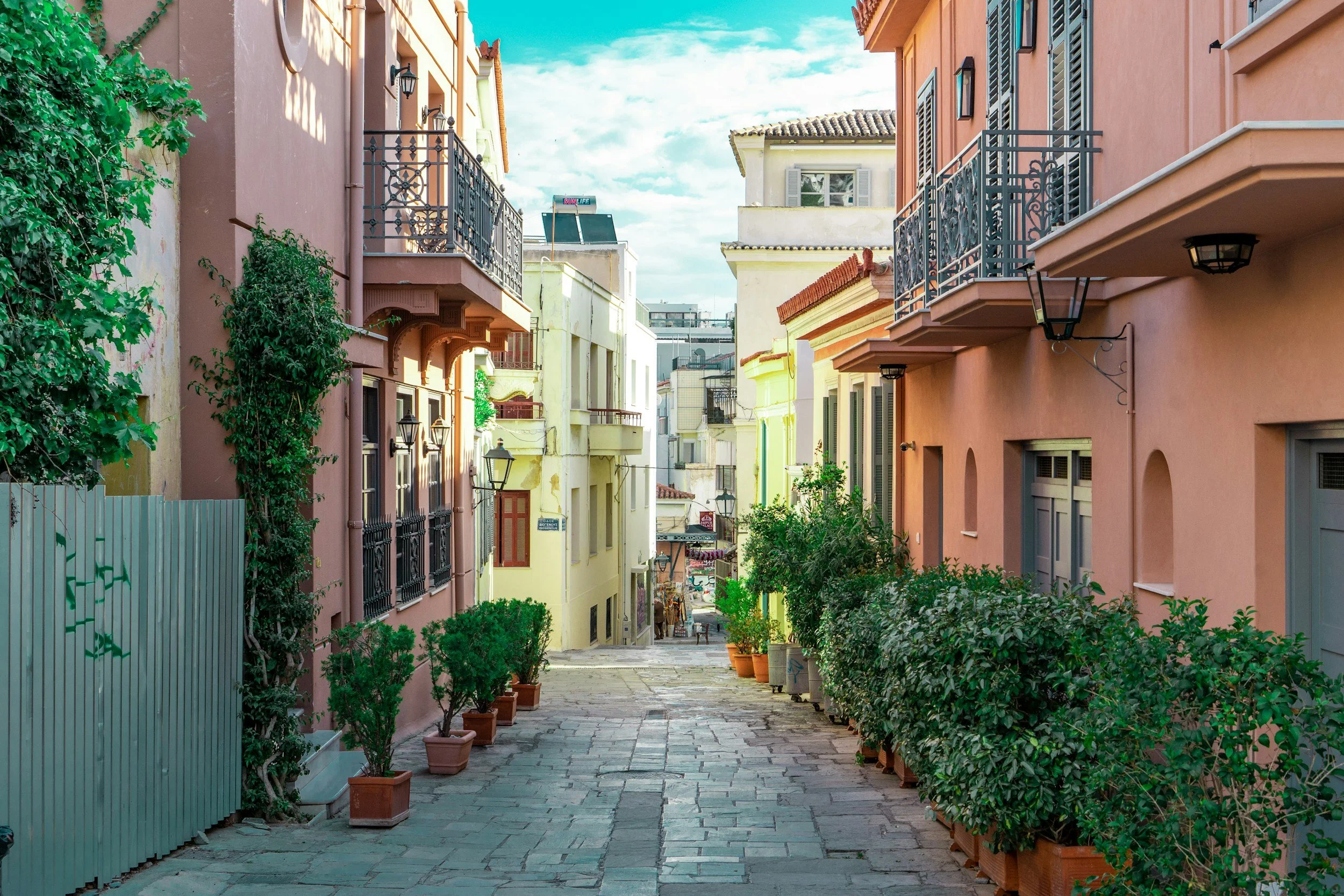
The oldest quarter in Athens, nestled below the Acropolis on its northern and eastern slopes. Pedestrianized streets, Byzantine churches, 19th-century houses, the tiny whitewashed Cycladic-village pocket called Anafiotika. Stay here on a first visit if you want to walk to the rocks before breakfast. Trade-off: the most touristed quarter in the city, and the central restaurant strip is mostly tourist tax.
-
Kolonaki
The chic residential district northeast of Syntagma, beneath Lykavittos Hill. Boutiques, embassies, museums, café-table culture. Quieter than Plaka, more sophisticated, less ancient-on-display. The pick for a second visit, or for travelers who want a city night that feels like a city night and not a movie set.
-
Glyfada / Athenian Riviera
The coastal suburbs along the Apollo Coast, 20–30 minutes south of central Athens — closer to Piraeus port than to the Acropolis. Beach clubs, golf, sea breeze, restaurants with sunset over the water. The natural pick for a pre-cruise base, a post-cruise decompression night, or a traveler who wants the Acropolis half-day done from a beach hotel.
-
The Dolli at Acropolis
For travelers who want the Acropolis as their literal backyard, The Dolli at Acropolis in Plaka is the most distinctive pick. Forty-six rooms in a 1925 neoclassical landmark building, individually appointed, the rooftop pool an infinity edge that mirrors the Acropolis itself when it's lit at night. On my rate at the property, the amenity layer is meaningful and doesn't book direct — what applies depends on your dates and the room category, and the specifics get walked through on the discovery call.
-
Hotel Grande Bretagne
For the heritage-flagship pick on Syntagma Square — the address every Athens grandparent knows — Hotel Grande Bretagne, a Luxury Collection Hotel is the call. The 19th-century building has hosted heads of state and royalty for over a century; the GB Roof Garden Restaurant is the iconic Acropolis-view dinner room in Athens. On my rate at the property, the amenity layer is real and quiet — calibrated to your dates and the suite category, with a few touches designed to land at check-in. The property also runs seasonal stay-and-save promotions that meaningfully shift the value math when active; we'll check what applies to your dates. None of it books direct.
-
One&Only Aesthesis
For a pre- or post-cruise base on the Athenian Riviera — and for clients who want their Athens trip to feel like coast-and-city rather than just-city — One&Only Aesthesis in Glyfada is the pick. 21 hectares of protected forest reserve, 141 keys ranging from rooms to bungalows to suites to villas to private homes, mid-century coastal design, the kind of property that lets you arrive at the cruise terminal rested. On my rate at the property, the amenity layer is calibrated to longer stays and pre/post-cruise rhythms — the specifics depend on your dates, room category, and how the trip slots around a sailing, and the conversation lives on the discovery call. The property also runs seasonal cruise-aligned promotions that materially change the value math when they're active; we'll check what's live for your dates.
Want one of these stays? Start a discovery call — I'll pull live availability, walk through the suite categories, and confirm which amenities and current promotions apply to your dates.
What I’d Do with Two or Three Days
Adjust to taste. The two-day version is the pre-cruise rhythm; the three-day adds breathing room and one of the day trips.
Day One
The Acropolis, Done Right
Up early. Be at the Acropolis ticket gate by 8 a.m., before the tour buses and before the heat. Walk the site clockwise — Propylaea, Temple of Athena Nike, the Parthenon, the Erechtheion with its caryatid maidens (the originals are in the museum a few hundred meters away). Allow 90 minutes minimum. Wear sturdy shoes — the marble is slick in places. Take twice the water you think you need.
Walk down the south slope to the Acropolis Museum, which is the building most travelers underrate and the one that, in extreme heat or rain, is the more rewarding hour anyway. The original caryatids, the Parthenon frieze, the artifacts that make the rocks legible. Allow 90 minutes, again.
Lunch in Thissio, the neighborhood that sits at the edge of the archaeological park — Acropolis views without the Plaka crowds. Afternoon walking the Apostolou Pavlou, the traffic-free archaeological promenade that runs along the south slope. End the afternoon in the Anafiotika pocket — the tiny Cycladic-village settlement of whitewashed houses tucked into the eastern slope of the Acropolis, almost entirely missed by tourists who come down through Plaka the conventional way.
Dinner at Strofi for the rooftop Acropolis view (refurbished in 2010, white modern minimalist), or Daphne's in Plaka for Greek classics in a restored 1830s mansion. Both are reservation-required.
Day Two
Neighborhoods, Museums, the Sunset
Slow morning. Greek breakfast — yogurt, honey, bakery-fresh tiropites (cheese pastries), coffee. Then to the National Archaeological Museum for the antiquities the Acropolis Museum doesn't cover, or the Benaki Museum for the long arc of Greek art and culture from prehistory through the 20th century. Pick one; both in a day is too much.
Lunch in Kolonaki, the residential-luxe quarter beneath Lykavittos. Café tables, boutiques, the Goulandris Museum of Cycladic and Ancient Greek Art if you want a third museum and an underrated one. Afternoon for a walk through Monastiraki flea market and the Central Market on Athinas Street if you want the crowded-vibrant version of Athens, or back to the hotel if you don't.
Late afternoon, take the funicular up Lykavittos Hill for sunset. Athens's tallest peak, a ten-minute cable-car ride from Kolonaki, the view to the Acropolis with the city spread underneath. Almost no one is up there compared to the chaos around the rocks themselves. This is the better Athens sunset hour.
Dinner at the GB Roof Garden at Hotel Grande Bretagne for the iconic Acropolis-view dinner with the lit-up rocks half a kilometer away, Hytra if you want a Michelin-starred tasting menu of modern Greek haute, or Milos at the Hilton if you want the seafood-counter format the chain made famous in New York. All reservation-required, all weeks ahead in summer.
Day Three
The Day Trip (or the Day You Skip)
Three options, ranked by my preference:
Cape Sounion at sunset. The Temple of Poseidon on the southernmost tip of the Attica peninsula, about 70 minutes south by road. Drive the coast, stop for lunch in Glyfada or Vouliagmeni, arrive at the temple in the late afternoon. The sunset over the Aegean from the temple steps is the iconic version of the Acropolis-sunset pitch — and it's far less crowded. Byron carved his name in one of the columns; you can still see it. This is the day trip I'd choose.
A Saronic island hop. Hydra and Spetses are the two Saronic islands worth a day; both are accessible by hydrofoil from Piraeus in 90 minutes to two hours. Hydra is car-free, more dramatic, the better photo-day. Done right, this is a day trip; done wrong, it's a rushed double-ferry.
Delphi. The other major archaeological site in Greece, about 2.5 hours northwest by road. Worth it if you've done the Acropolis in depth and want the other center of the ancient Greek world. Long day. Better as a one-night-out than a same-day round trip.
If three days isn't in the cards, skip the day trip and take the third morning slow — coffee, a final walk, and to the airport or to Piraeus.
Specific Things I'd Recommend
The Athens metro is also a free antiquities museum. When the city expanded the subway system, the excavations turned up so many artifacts that three stations now display them in cabinets along the platforms — Acropolis, Syntagma, and Evangelismos. The displays are accessible whenever the metro is running, 5 a.m. to midnight. If you ride the metro between sites, you're walking past museum-grade Roman and Byzantine objects on the way to your platform. Most travelers never look up.
Lykavittos at sunset is the better Athens sunset hour. The funicular runs from the top of Kolonaki, takes ten minutes round trip, and delivers you to a small chapel and a café terrace 277 meters above the city. Acropolis spread beneath you, the Saronic Gulf in the distance, fewer than a hundred people there at any given moment. Compare to the chaos at the Areopagus or Philopappou Hill at the same hour. No competition.
Anafiotika is hidden in plain sight. A pocket of about thirty whitewashed Cycladic-style houses tucked into the eastern slope of the Acropolis, built in the 1840s by stonemasons brought from the islands of Anafi and Naxos to construct the king's new palace. They built houses that looked like home. Most travelers walk through Plaka and never find the path up. The shortcut: from Plaka's main pedestrian alley, climb the steps near the Church of Agios Georgios on the rock.
Outdoor cinemas under the stars. Athens has a proper summer outdoor-cinema culture — multiple venues, films shown in original language with Greek subtitles, ouzo and wine served at table. Cine Paris in Plaka has an Acropolis view from the rooftop seats. The schedule runs late May through September.
The Acropolis Museum is the better wet-weather day. If your one full Athens day arrives with rain or a heat dome, prioritize the museum over the rocks. It's air-conditioned, the artifacts are the rocks' own context, and the third-floor Parthenon Gallery — designed to mirror the dimensions of the Parthenon itself — is one of the great museum spaces in Europe.
Greeks didn't have tomatoes until 1818. The ubiquitous tomato, the foundation of half the Greek dishes you'll eat, was only introduced to Greece — in Athens — about 200 years ago. You're eating modern food in an ancient city, and the seams show in fun ways once you start looking for them.
What I'd Skip
Omonia Square as a base. It's central, which is why it appears in budget itineraries — but it's seedy after dark and the surrounding blocks are not where you want to walk back to your hotel at 11 p.m. Stay in Plaka, Kolonaki, Syntagma proper, or on the coast.
The full evzone changing-of-the-guard ceremony hour. Yes, see the evzones (the soldiers in the traditional skirts and pom-pom shoes) outside Parliament. Catch the every-hour-on-the-hour change as you walk through Syntagma Square. Don't wait around for the Sunday-morning full ceremony unless you specifically came for parade-and-uniform content.
Plaka restaurants with menus in five languages. Same tourist-tax pattern as Fira on Santorini and Innere Stadt in Vienna. Long laminated multilingual menu, a host trying to pull you in from the alley, photo-illustrated dishes. Walk past them. The Plaka restaurants worth eating at — Daphne's, Sholarhio, Brettos for a drink — don't need to advertise that hard.
Driving in central Athens. The traffic is hostile and the parking is worse. Use the metro (excellent), taxis (cheap), or your hotel's transfer for arrivals and departures. If you're doing a Cape Sounion or Delphi day, hire a car and driver for the day — about 200–300 euros for the round trip and immeasurably less stressful.
The "Athens nightlife" pitch unless you specifically want it. Athens has a real late-night scene — Gazi, the music clubs, the bouzouki bars that open at midnight — but you came to Greece for islands, and the islands have their own version of late-night. Save the energy for Mykonos or for a Santorini Pyrgos dinner that runs to 1 a.m. naturally. Sleep is a luxury good in Greece; budget it.
For Greek-Isles Cruisers
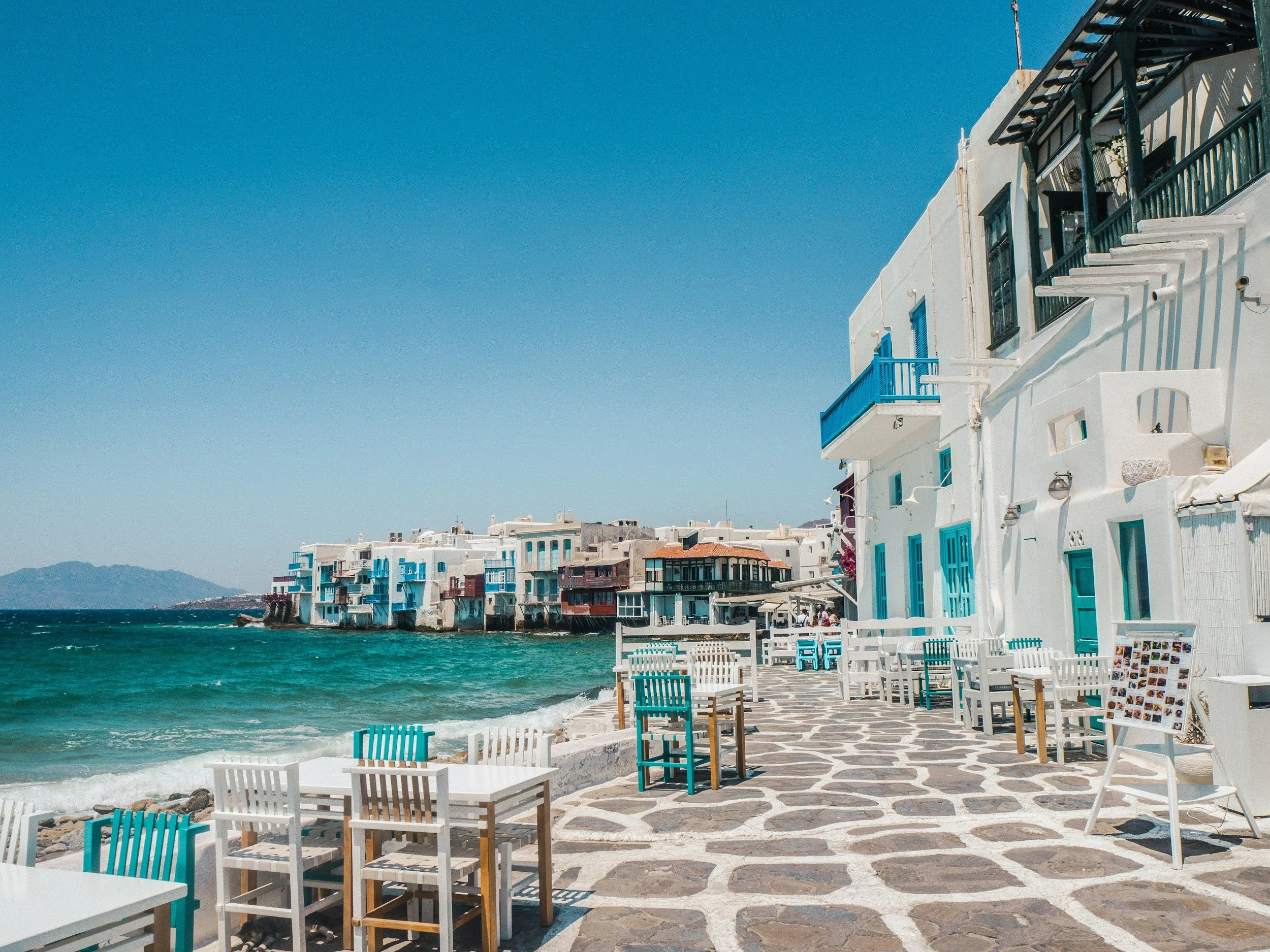
If your Athens stop is the night before or the day after a cruise out of Piraeus, the play is to base on the Athenian Riviera, not in central Athens. One&Only Aesthesis in Glyfada is the pick — 20 minutes from the cruise terminal, sea-breeze instead of city-heat, and the property's current promos make the value math notably better than central. The day-of pattern: morning at the Acropolis (or museum, depending on weather), lunch in Plaka or Thissio, transfer to the resort by mid-afternoon, dinner waterside, sleep. Morning of cruise: ten-minute transfer to port, you arrive on the ship rested rather than already-tired.
The reverse for post-cruise — disembark, transfer to Glyfada, decompress, then either fly out or take a second night in central Athens to do the city properly.
If you're considering a Greek-isles cruise — small-ship or large — the conversation about which itinerary fits which traveler is worth having before you book. Significant variance in port days, ship size, and whether the ship anchors in the Santorini caldera versus docking at Athinios.
For Honeymooners
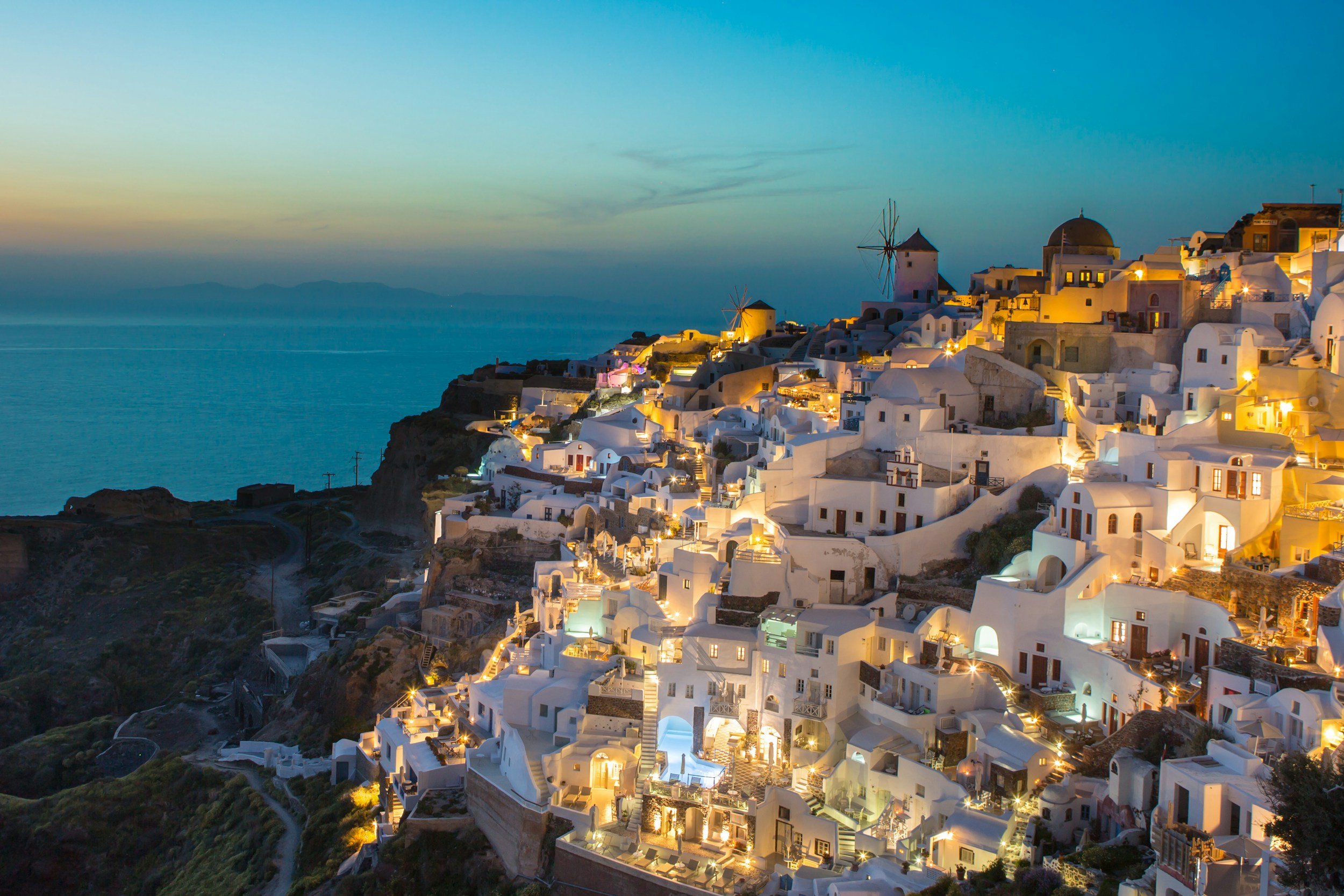
Athens is the night before the islands, not the romantic centerpiece — that's Santorini's job. What Athens is, on a honeymoon, is the awe-and-intensity night. The "look how old this place is, look at us standing in it together" night. One night, dinner with a lit-up Acropolis view (GB Roof Garden does this work flawlessly), sleep at The Dolli with the rooftop infinity pool reflecting the rocks at midnight. Then to Piraeus or to the airport, and on to the islands.
If you want a slower honeymoon arrival — a coastal pre-cruise night before the islands rather than a city night — One&Only Aesthesis is the alternative. Same one-night frame, different energy.
If you want me to design the full Greek-isles honeymoon — Athens for one or two nights, Santorini for four, optional Mykonos or Crete extension — that's exactly the kind of planning I do.
For Multi-Island Sweepers
Athens is the front half. Two nights here, then high-speed catamaran to Santorini (5.5 hours from Piraeus) or domestic flight to whichever island your itinerary opens with. The hotel call depends on what role Athens plays — if it's the city night, base in Plaka or Kolonaki for the walking; if it's the rest-before-the-islands night, base on the coast.
The Rachel-style itinerary is the version I'd model — Athens to Lucerne to Santorini to Rome — and Santorini gets the longest stretch. Plan your time accordingly. Athens is not the place to overstay.
Plan Athens With Me
If you're thinking about Athens as a pre-cruise stop, as the front half of a Greek-isles sweep, or as the standalone city long-weekend it deserves to be — that's exactly the kind of planning I do. A 30-minute discovery call is where it starts. No fee, no pressure. Just the city, your timeline, and what you actually want to feel when you stand on the Acropolis and look out at the rest of the trip ahead.
Last updated: April 2026. I keep this guide current. If a hotel I recommend slips, a restaurant changes hands, or access to a site shifts, the page changes. Travel changes. The work doesn't stop when the page goes live.