
DESTINATION GUIDE
Amsterdam, the Way I'd Plan It
An advisor's guide — opinionated, useful, and built around the canals and the museums and the version of the city that doesn't appear in the spring-break clichés.
About the Destination
Amsterdam is the city most travelers arrive with the wrong picture of, and that's the framing problem. The American mental model — coffee shops and the Red Light District — is a tiny, narrow slice of the actual city, and if it's the lens you arrive with, you'll spend three days walking past the things you actually came to Europe for. Spring-break Amsterdam is a place. Real Amsterdam is the other 95% of the surface area.
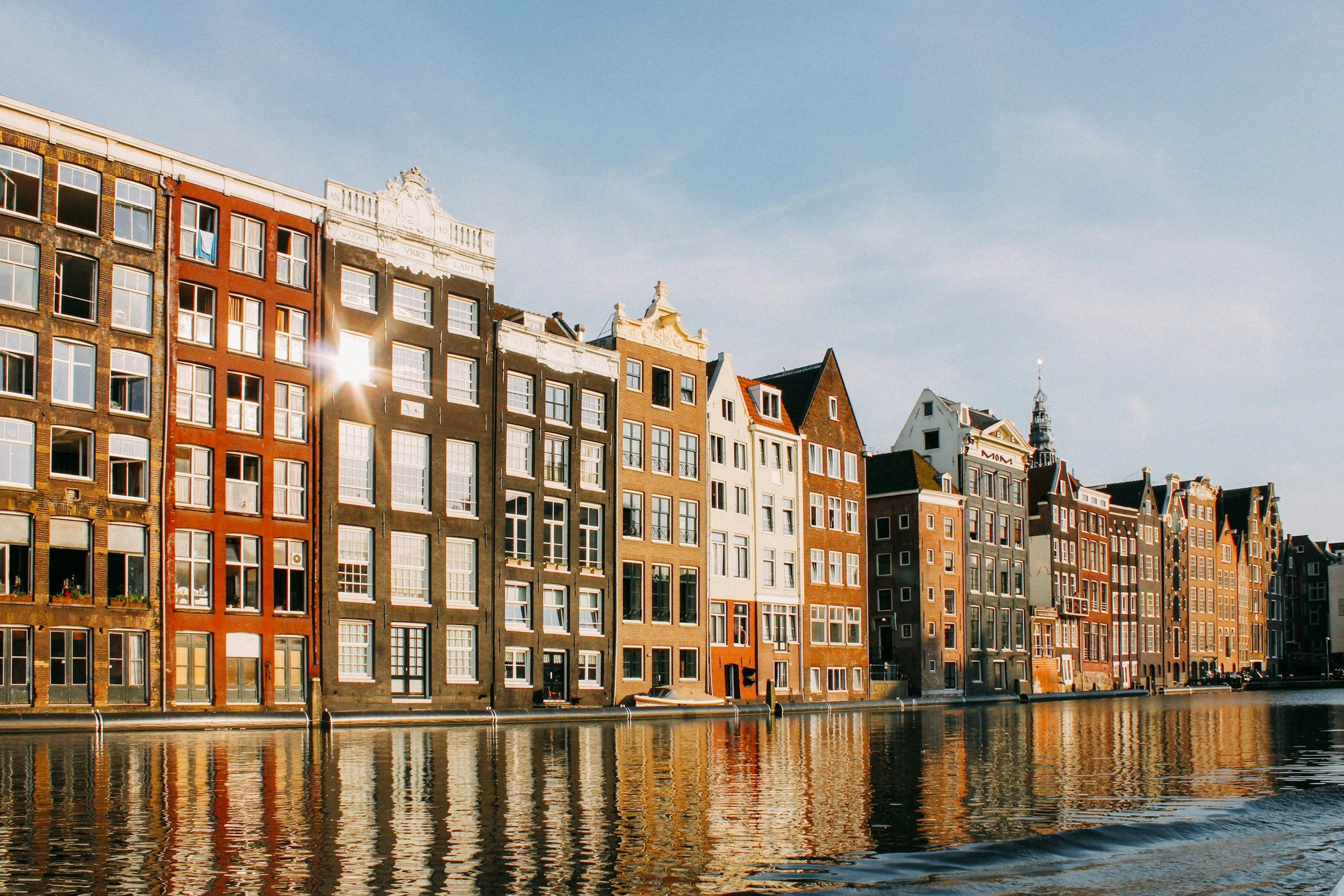
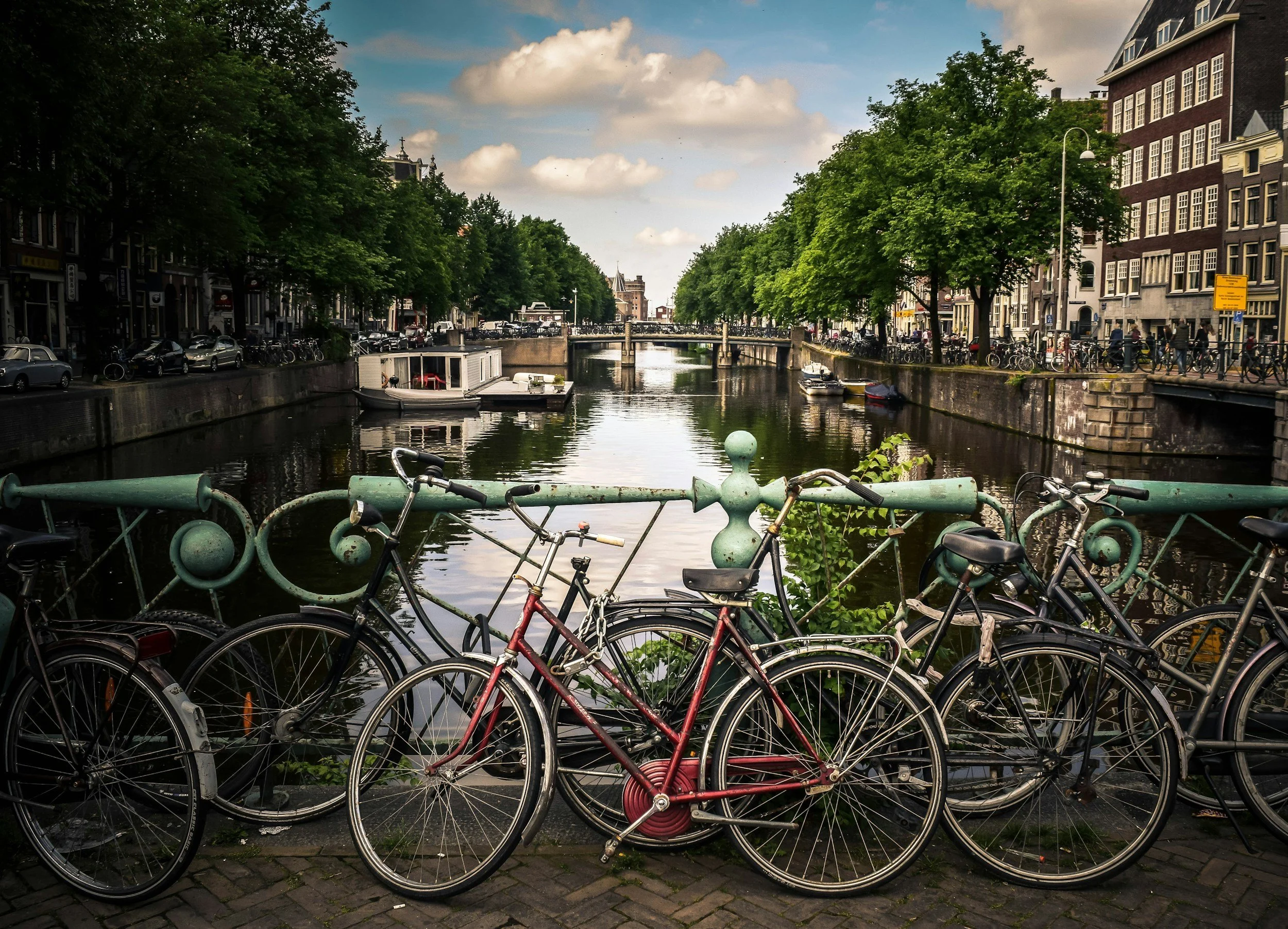
Done correctly, Amsterdam is one of the most rewarding small cities in Europe — a UNESCO World Heritage canal ring, the highest concentration of major art museums per square kilometer of any city in the world (Rembrandts, Van Goghs, Vermeers, the Night Watch, the Sunflowers), seventeenth-century gabled merchant houses on every block, a bicycle culture so deep-rooted that the bikes outnumber the residents, and one of the oldest, most welcoming LGBTQ+ urban cultures in Europe. The whole walkable historic center fits inside a roughly two-mile radius. You can absorb it in three days. You'll want five.
Most clients come to me asking about Amsterdam in three contexts: as the start or end of a Rhine river cruise (this is the most common — every Rhine sailing begins or ends here, and the city deserves more than the standard one-night embarkation pause), as part of a multi-city European sweep (Paris-Amsterdam by Thalys is 3 hours 20 minutes, Brussels is 90 minutes, Eurostar from London is 4 hours), or as a standalone three-to-five-day visit in its own right.
Here's how I think about it:
Best time to visit
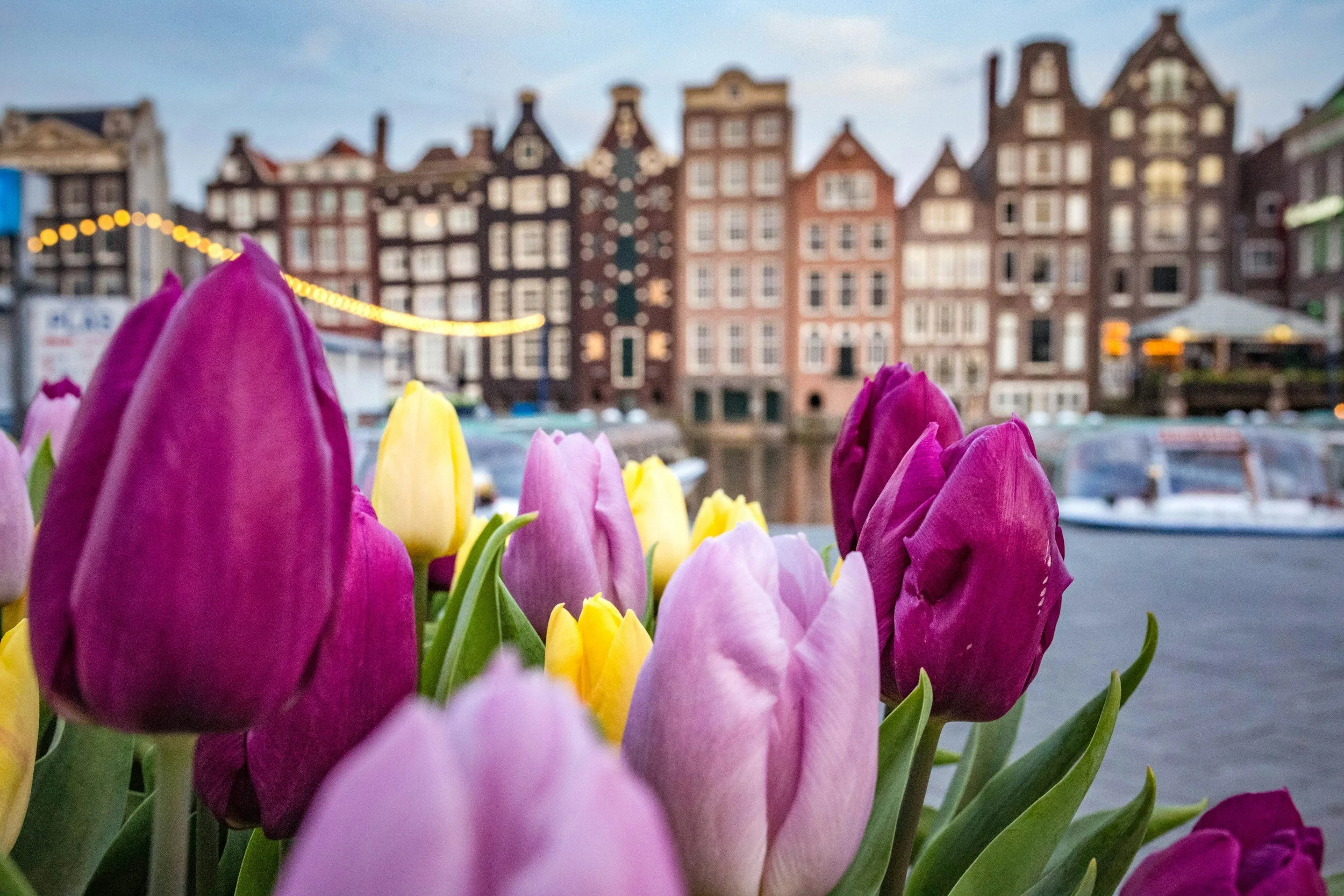
April–June and September–early October. Spring brings the tulip bloom (peak mid-April–early May, with day trips to Keukenhof Gardens 30 minutes south), early autumn brings golden light on the canals and fewer crowds. Avoid mid-July through August — peak tourist surge, hotel prices climb, and the city's open-window-and-flower charm is overrun. December is its own version — the lights on the canals, Sinterklaas on December 5, the Christmas markets — cold but worth it.
How long to stay
Three full days minimum, four ideal. Five if you're combining with day trips to Keukenhof, Volendam, Zaanse Schans windmills, or Delft. Add a pre-cruise night if you're embarking on a Rhine cruise — embarking on the same day as a transatlantic flight is the most common avoidable mistake in river cruising.
Currency / Language
Euro. Dutch is official, but English is spoken at near-native level by almost everyone in the tourist-facing economy — Amsterdam is the easiest non-English-speaking European city to navigate without speaking the local language. Dank je wel (thanks) is appreciated and unexpected.
How to get there
Schiphol (AMS) is one of Europe's best-connected airports, 18 km southwest of the city; the train to Amsterdam Centraal runs every 10 minutes and takes 17 minutes for €5.60. From elsewhere in Europe — Thalys to Paris in 3h20m, ICE to Cologne and Frankfurt for German rail connections, Eurostar to London in 4h via Brussels.
One thing guides won't tell you
Pre-book everything that requires entry. The Anne Frank House sells timed-entry tickets months ahead and rarely has same-day availability; the Van Gogh Museum also requires timed slots; the Rijksmuseum is more flexible but lines move faster with pre-booked entry. Without these tickets booked weeks ahead, you'll be downgrading the trip on day two.
Why I Send Travelers Here
Because Amsterdam, planned correctly, is the European city that delivers the most cultural depth per day for the least travel friction. Walking everywhere is realistic. The museums are world-class and densely clustered. The neighborhoods change character every six blocks. The food scene has matured well past the bitterballen-and-beer cliché. And the hotels — the historic-canal-house and the contemporary-lifestyle versions both — are some of the most distinctive in Europe.
It's also a city my clients keep returning to. I send couples for honeymoons that want a city week before or after a river cruise — Amsterdam's romantic-canal-walk evening is genuinely the romantic-canal-walk evening, and there are fewer crowds than Paris or Venice. I send river cruisers (the Rhine, the Danube, the Tulip-Time tulip itineraries — many of which originate or terminate here) and tell them to take Amsterdam seriously instead of treating it as airport-with-a-canal. I send LGBTQ+ travelers to the city that legalized gay marriage first, in 2001, and where the Pride canal parade in late July is still the world's only Pride that happens on the water. I send travelers following Jewish heritage to one of the most preserved Jewish quarters in Western Europe, including the Anne Frank House on the Prinsengracht and the 17th-century Portuguese Synagogue.
It's also one of the cities on Rachel's European sabbatical, and one of the cities discussed in my Rivers & Small Ships specialty page — the latter for a specific reason: Amsterdam is the origin city of every major Rhine river cruise itinerary, and the version of the trip that includes a real Amsterdam stay before or after the sailing is meaningfully different from the version that doesn't.
Every recommendation below comes through the lens of how I plan Amsterdam for the clients I send, the hotel relationships I rely on (with one Erik-flagged property — the Andaz Amsterdam Prinsengracht — at the lead), and a clear point of view about which neighborhoods earn your nights, which museums earn the line, and which version of the city is actually worth flying for.
Where I'd Anchor
Three neighborhoods cover almost any traveler's reason for being in the city:
-
The Grachtengordel (Canal Belt) — Western Half
The 17th-century concentric canal ring inside the Singelgracht is the historical and visual center of Amsterdam, and the western half — Prinsengracht, Keizersgracht, Herengracht, near the Jordaan — is the half I'd anchor first-timers. Stay here on a first visit if you want to step out of your hotel into the canal-house Amsterdam of the photographs. Walk to the Anne Frank House, the Westerkerk, the Nine Streets shopping district, and the Jordaan within minutes.
-
The Jordaan
Just west of the canal belt, the historic working-class quarter that's now Amsterdam's most charming neighborhood — narrow streets, brown cafés (the traditional wood-paneled neighborhood pubs), small art galleries, the Westerkerk with its tower (the same church bells Anne Frank wrote about hearing from her hiding place), and Saturday morning at the Noordermarkt for the farmers' market and antique stalls. Best for a second visit, or for travelers who want their Amsterdam to feel like a neighborhood rather than a postcard.
-
De Pijp / Museumplein
South of the canal belt, near the major museums and the Albert Cuyp Markt (the largest street market in the Netherlands). Better for travelers who want easy access to the Rijksmuseum, Van Gogh Museum, and Stedelijk on a museum-heavy itinerary — or who want a more residential, less-touristed evening base.
-
Andaz Amsterdam Prinsengracht
For the contemporary-lifestyle pick on the canal — and the property I'd lead with for a first-time Amsterdam visit — Andaz Amsterdam Prinsengracht at Prinsengracht 587 is the call. The former Public Library, reopened in 2012 as Hyatt's lifestyle-luxury Andaz flagship, with interiors entirely designed by Marcel Wanders (Holland's iconic contemporary designer — the bespoke artworks, the observatorium-themed atrium, the "Delft Blue Room" — are worth the stay on their own). 122 rooms and five suites, including a penthouse suite with the largest hotel terrace in the city overlooking the canals. Walking distance to the Jordaan, the Nine Streets, the Anne Frank House, and the Westerkerk. On my rate at the property, the amenity layer is real and quiet — calibrated to your dates and the room category, deepened materially on longer stays, and applicable broadly across Barstro Prins & Aap, Renvy, and room service. The specifics get walked through on the discovery call.
-
Pulitzer Amsterdam
For the iconic 17th-century canal-house heritage pick, Pulitzer Amsterdam is a few blocks south on the same Prinsengracht canal — twenty-five restored 17th- and 18th-century houses, joined together into one extraordinary five-star hotel with intimate rooms, tranquil inner gardens, and an award-winning bar that featured prominently in Ocean's Twelve (the film also shot scenes elsewhere in the building). On my rate at the property, the amenity layer doesn't book direct, deepened materially on longer stays, and applicable broadly across the property's restaurants and bars. The property also runs seasonal stay-length promotions that materially shift the value math on four- or five-night stays; we'll check what's live for your dates.
-
De L'Europe Amsterdam
For the milestone-trip family-owned 5-star pick, De L'Europe Amsterdam at Nieuwe Doelenstraat 2-14 is the heritage anchor. The first luxury hotel in Amsterdam, family-owned for over a century, on the Amstel river with the major cultural landmarks within minutes — the Royal Palace, Dam Square, the Bloemenmarkt, the Nine Streets. Two-Michelin-starred Restaurant Flore, the French brasserie Marie, the iconic Freddy's Bar, and Chapter 1896 — an elegant library-bar that turns into a speakeasy at night. On my rate at the property, the amenity layer is calibrated to your dates and the suite category, deepened materially on longer stays, and the specifics get walked through on the discovery call. The property also runs seasonal stay-length promotions that materially shift the value math; we'll check what's live for your dates.
Want one of these stays? Start a discovery call — I'll pull live availability, walk through the suite categories, and confirm which amenities and current promotions apply to your dates. And the small extra at check-in — a welcome note from me, the kind of touch the standard amenity package doesn't list — is part of how I deliver these stays.
What I’d Do with Three or Four Days
Adjust to taste. The four-day version is the pacing I'd write for first-timers; the three-day is the version for travelers passing through.
Day One
The Canal Belt and the Jordaan, on Foot
Don't start with the museums. Start with the city. Coffee at any neighborhood brown café. Walk the Nine Streets (Negen Straatjes) — the small grid of cross-streets between the canals where the boutique shops and design stores live, unhurried in the morning. Walk Prinsengracht north toward the Westerkerk. The Anne Frank House is on the same block; if you've pre-booked your timed entry weeks ahead, this is your morning anchor — allow 90 minutes for the visit and another 30 to recover from it.
Lunch in the Jordaan — Café Papeneiland at the corner of Prinsengracht and Brouwersgracht is one of the oldest brown cafés in the city (1642) and worth the apple pie alone. Walk the Jordaan's small streets afterward — Bloemstraat, Egelantiersgracht, the Hofjes (small almshouse courtyards tucked behind unmarked doors). Saturday mornings, end at the Noordermarkt for the farmers' and antique market.
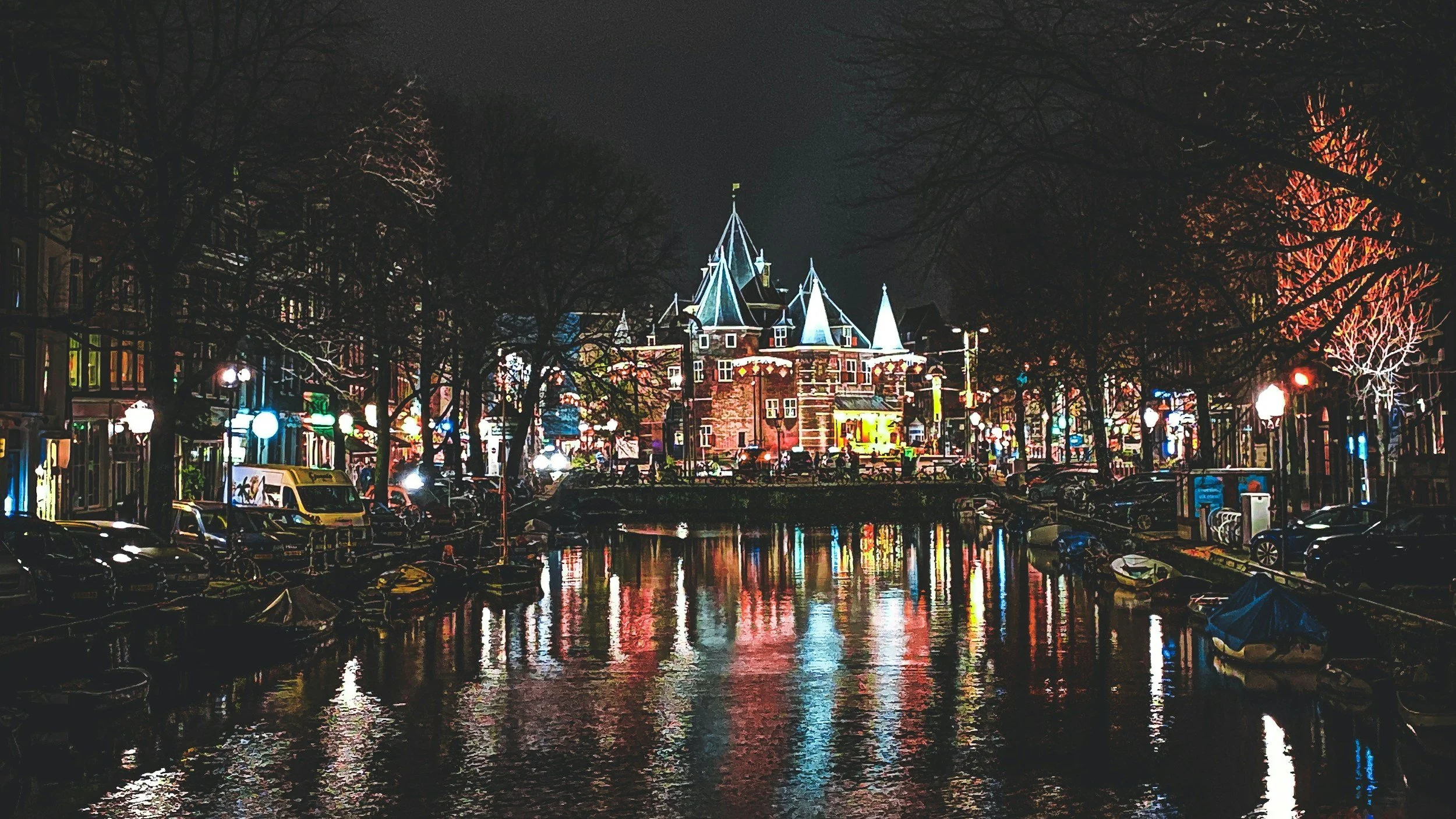
Late afternoon, take a canal-boat cruise — yes, it's touristy; do the small-boat private version (12 passengers max, open boat, locally captained) rather than the big glass-roof barges, and the difference is enormous. At dusk, the canal-light hour is one of the legitimate magic-of-Amsterdam moments. Dinner anywhere in the Jordaan or canal-belt that's caught your attention.
Day Two
Museumplein
Start at the Rijksmuseum at opening with a pre-booked timed entry. Pick your wing — the Dutch Golden Age galleries (Rembrandt, Vermeer, Hals, the Night Watch) are the headline, and three hours there beats six hours in the full museum. Coffee in the museum café when you need a break.
Walk to the Van Gogh Museum for the afternoon. Two hundred and six paintings (compare to twenty-two Rembrandts in the Rijksmuseum) — by far the largest single Van Gogh collection in the world, and the chronological hanging order traces his full evolution from the dark Dutch period through Arles and the asylum at Saint-Rémy. Allow two unhurried hours.
If you have stamina, the Stedelijk Museum next door for modern and contemporary art — Mondrian, De Stijl, Malevich, the Cobra group, contemporary Dutch design. Worth an hour even tired.
Late afternoon, walk Vondelpark at golden hour — Amsterdam's Central Park, full of locals, far prettier than it sounds. Dinner in De Pijp — the gentrified-old neighborhood is now one of the city's strongest restaurant rows.
Day Three
Jewish Heritage and the East
Morning at the Jewish Historical Museum complex on the Waterlooplein — actually four interconnected sites including the Portuguese Synagogue (built 1675, never electrified, lit by candles), the Jewish Historical Museum itself, the Children's Museum, and the National Holocaust Memorial. Allow two-and-a-half hours minimum; the complex deserves it.
Lunch at the Hermitage Amsterdam café or in the nearby Plantage neighborhood. Afternoon at the Hermitage Amsterdam (a satellite of the St. Petersburg Hermitage with rotating exhibitions) or the Tropenmuseum (formerly the museum of the colonies, now a thoughtful museum of world cultures and one of Amsterdam's strongest under-visited collections).
End the day at Vondelpark for a second walk if it's been a hot one, or Albert Cuyp Markt for an aimless browse-and-stroopwafel before dinner. Dinner anywhere in De Pijp.
Day Four
A Day Trip, or Slower Amsterdam
Three options:
Keukenhof Gardens (mid-March–mid-May only). The world's largest tulip garden, 30 minutes south by direct bus, eight weeks a year. If your dates land in the bloom, this is the day trip — pair with the Lisse and Aalsmeer flower fields driving north back. Pre-book timed entry online; it sells out.
Zaanse Schans + Volendam + Edam. The classic North Holland day trip — windmills, wooden clogs, fishing villages, cheese towns. Cliché, yes; also the experience your relatives expect to see in your photos. A half-day version is enough.
A slower day in Amsterdam itself. Vondelpark in the morning, De Hallen (the converted tram-depot creative hub in Oud-West, with food court, library, indie cinema) for lunch, Amsterdam-Noord in the afternoon — the across-the-IJ neighborhood reached by free ferry behind Centraal Station, where the EYE Filmmuseum, the A'DAM Lookout (with the swing-over-the-edge skydeck), and a string of contemporary restaurants live. Sunset back over the IJ on the ferry.
By day four, Amsterdam makes its own recommendations.
Specific Things I'd Tell You
The small-boat canal cruise is materially different from the big-boat one. The 80-passenger glass-roofed barges run every twenty minutes, are full of cruise-day groups, and feel like buses. The 12-passenger open-boat versions (Those Dam Boat Guys, Captain Jack, Smidtje) — locally captained, sometimes BYOB, an actual person narrating in real time — cost about double and are worth ten times more. The right canal hour is genuinely one of the great urban experiences in Europe. The wrong canal hour is a tourist conveyor.
Locally-led food tours beat the standard food tours by an order of magnitude. I send clients to Project Expedition's Secret Food Tour version — a small-group neighborhood walk with a local guide who actually lives in the area being walked. Three hours, six or seven food stops, the kind of stories about a city that big-bus food tours don't tell. The same principle applies to walking and culture tours — the locally-led version is always the version. Lokafy's local-guide network is the platform I use most often for the city-walks layer.
The Hofjes are the Jordaan's hidden inner courtyards. Almshouses built between the 1500s and 1700s for elderly women (and now mostly residential), tucked behind unmarked doors throughout the Jordaan. They're not advertised; you find them by stepping through doors that look like private entrances and then standing in 400-year-old cobblestoned courtyards with rose bushes. The Begijnhof off Spui is the most famous; St. Andrieshofje on Egelantiersgracht is the most evocative.
Café Papeneiland in the Jordaan has been in business since 1642. It's at the corner of Prinsengracht and Brouwersgracht. Bill Clinton ate the apple pie there in 2011 and apparently asked for the recipe. The pie deserves the line.
The Westerkerk's bells are the bells Anne Frank wrote about. "The clock in the Westertoren strikes a quarter, half, three-quarters and a full hour, and I love hearing it" (her diary, 1942). The tower is still there, still chimes, still on the same Prinsengracht as the Anne Frank House and the Andaz hotel. If you stay at the Andaz, you're hearing the same bells.
Van Gogh painted exactly two paintings in Amsterdam, and the museum that holds them has 204 more. The chronological hanging order at the Van Gogh Museum is the right way to see his work — the Dutch period is dark and tonally tight, and walking forward through Antwerp, Paris, Arles, Saint-Rémy, and Auvers-sur-Oise is watching the color come on like a controlled fire. The Sunflowers, when you reach them, hit harder for the half-mile of walking it took to get there.
The Pulitzer Hotel is the Ocean's Twelve hotel. Most travelers don't realize. The room scenes were filmed in the property and the bar. If you stay at the Pulitzer, ask the bartender to point out which corner.
Sauna Deco is the right between-sights afternoon hour. A 1920s art-deco hammam tucked into a canal-house basement on Herengracht — vaulted brickwork grotto, multiple steam rooms, a cold plunge, and the kind of unhurried Northern-European spa rhythm that resets a museum-heavy day. Two hours and a 55-minute massage is the right combination. Worth pre-booking; some afternoons fill.
What I'd Skip
The Red Light District as a destination. Walk through it on the way somewhere else if you must — it's central, you'll see it whether you plan to or not — but don't anchor a night there. The neighborhood has been gentrifying steadily; the spectacle is dwindling, the cliché remains, and the surrounding streets are touristy in the worst sense. Save the night for the Jordaan, De Pijp, or Amsterdam-Noord.
The standard "coffee shop" tour. If you came to Amsterdam to use a coffee shop, fine; if you came for Amsterdam, a coffee shop is twenty minutes of mediocre brownie and a head fog that wastes your afternoon. Make it a passing detail at most.
Restaurants on the Damrak and around Centraal Station. Same multilingual-menu tourist-tax pattern as Vienna, Athens, Santorini, Rome, and Paris. Long laminated menus, photo-illustrated dishes, hosts who try to pull you in. Walk three blocks deeper into the city.
Driving anywhere in Amsterdam. The trams are the fastest way around if walking is too slow, and the bicycle infrastructure is world-class — but only if you're already comfortable cycling in dense urban traffic with absolute right-of-way for two-wheelers. Tourists on rented bicycles are a known hazard; if you're not a confident cyclist, walk or take trams.
The Heineken Experience unless you're specifically a beer-history enthusiast. It's well-marketed and full at any given hour. The actual beer-and-canal-house culture lives in the brown cafés — Café Papeneiland, Café 't Smalle, Café Hoppe — where the same beer costs five euros, the room is 350 years old, and the bartender is not in costume.
For River Cruisers
If your Amsterdam trip is the start or end of a Rhine river cruise — which is the most common context my clients arrive in — the single most important call you'll make is adding a real Amsterdam stay before or after the sailing, not treating the city as a 12-hour embarkation pause. Almost every Rhine itinerary starts in Amsterdam and ends in Basel (or runs the reverse direction), and Amsterdam earns at minimum two full pre- or post-cruise nights. One night is the most-common avoidable mistake in river cruising.
If you're on a Rhine sailing, base in the canal belt for the city days; either Andaz, Pulitzer, or De L'Europe will set the right tone, and all three are within easy taxi distance of the Passenger Terminal Amsterdam at Piet Heinkade.
The deeper conversation about which Rhine itinerary fits which traveler — AmaWaterways vs. Viking vs. Avalon, the timing of the Tulip Time sailings, the Christmas-markets sailings — lives on the Rivers & Small Ships specialty page. If you're considering a Rhine cruise and don't know yet which itinerary or which line, that's a 30-minute discovery call where I can save you several months of research.
For Honeymooners
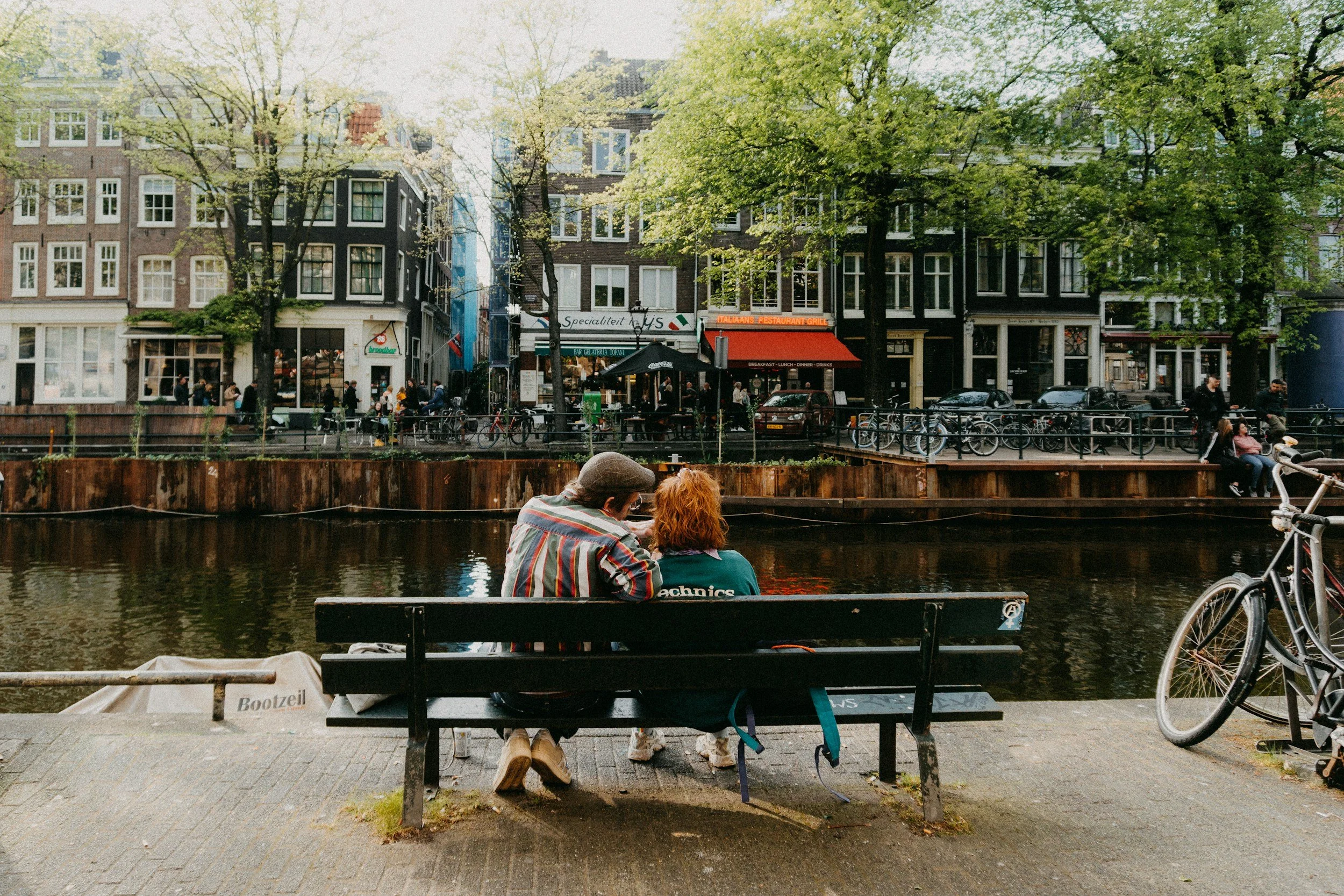
Amsterdam is the underrated honeymoon city. The romantic-canal-evening cliché is real — the lights on the bridges, the boats slipping beneath them, the gabled houses reflected in the water — and there are far fewer crowds than Paris or Venice in the same idiom. Anchor at the Andaz for the contemporary-lifestyle Marcel-Wanders-design version, the Pulitzer for the 25-canal-house heritage version, or De L'Europe for the family-owned 5-star version with the 2-Michelin Restaurant Flore for the honeymoon dinner.
The honeymoon evening, in my read, is dinner somewhere along the canals followed by a small-boat private canal cruise after dark — a bottle of wine, the city lit up, just the two of you on the water. You can book the boat ahead. It's the single best Amsterdam hour, and most travelers don't know to plan it.
If you want me to design the full Amsterdam honeymoon — or to combine Amsterdam with a Rhine river cruise, with Paris, with London via Eurostar, or with the Belgian-and-Dutch lowlands week (Bruges, Ghent, The Hague) — that's exactly the kind of planning I do. Start a discovery call.
For LGBTQ+ Travelers
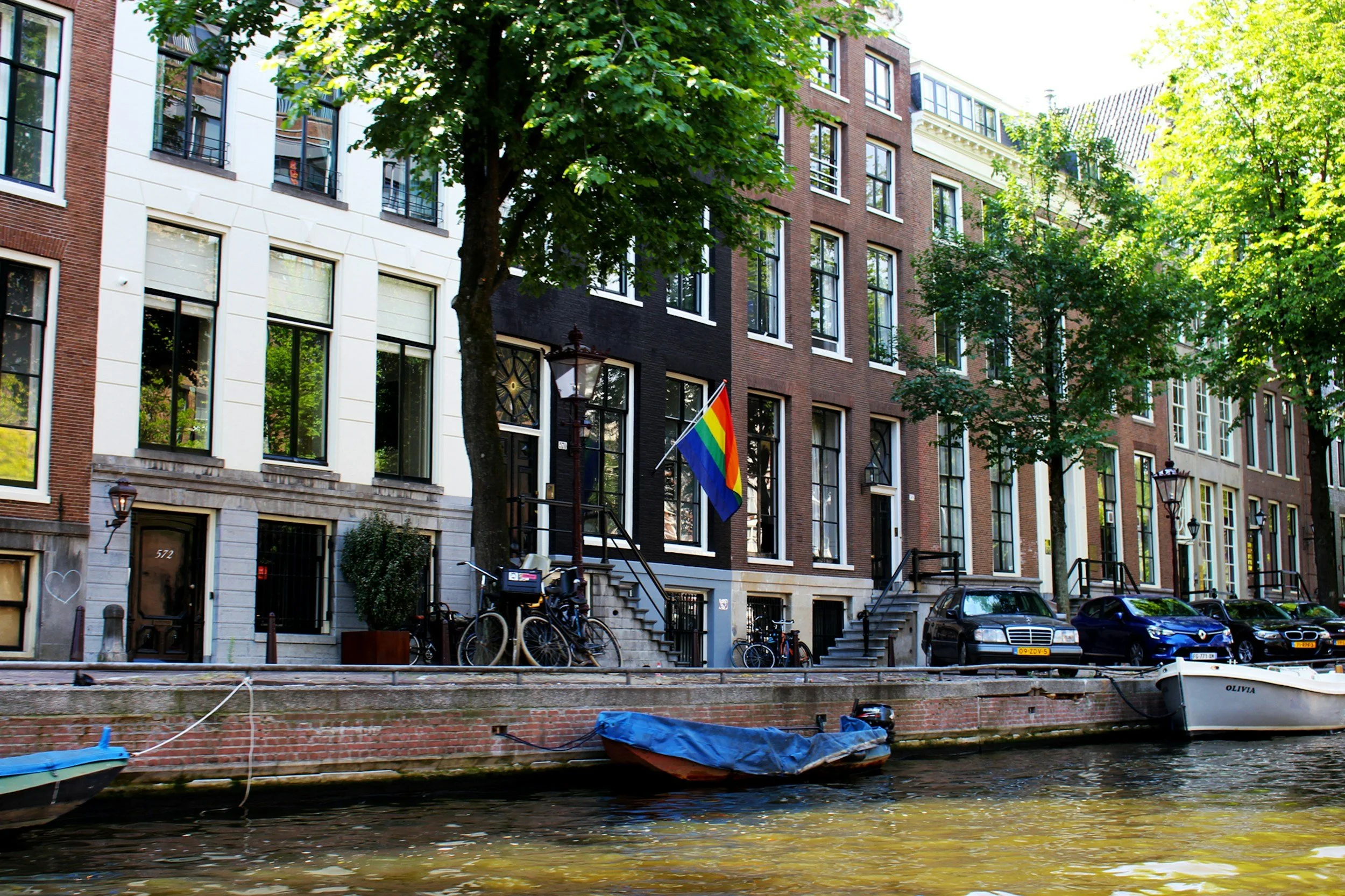
The Netherlands was the first country in the world to legalize same-sex marriage (in 2001). Amsterdam has the longest continuously-welcoming gay-friendly urban culture in Europe — the Reguliersdwarsstraat scene has been here for decades, the city is one of the safest in Europe for openly queer travel, and Amsterdam Pride, held annually in late July or early August, is the only Pride parade in the world that takes place on the water — the canals fill with boats and a hundred thousand spectators line the bridges.
For LGBTQ+ honeymooners, milestone trips, or anyone wanting a city that wears its history on the surface rather than asking you to look for it — Amsterdam is the easy yes. The Homomonument at the Westermarkt, the world's first public memorial to LGBTQ+ people persecuted under Nazi occupation, sits next to the Westerkerk and the Anne Frank House. Walk past it.
This is one of the angles Dandy Travel Society is built to handle directly. Reach out if you want a curated LGBTQ+-led version of any Amsterdam itinerary.
For Travelers Following Jewish Heritage
Amsterdam was for centuries one of the great Sephardic and Ashkenazi Jewish cities of Europe — pre-1940, the Jewish community numbered around 80,000 in a city of 800,000. The 1940–1945 Nazi occupation reduced that to perhaps 20,000 survivors. The arc of that history is preserved in the city more thoughtfully than in almost any other European capital, and the Jewish Cultural Quarter complex on Waterlooplein — the Jewish Historical Museum, the Portuguese Synagogue (1675, never electrified, lit by candles), the National Holocaust Memorial, and the Children's Museum — is the right way to encounter it.
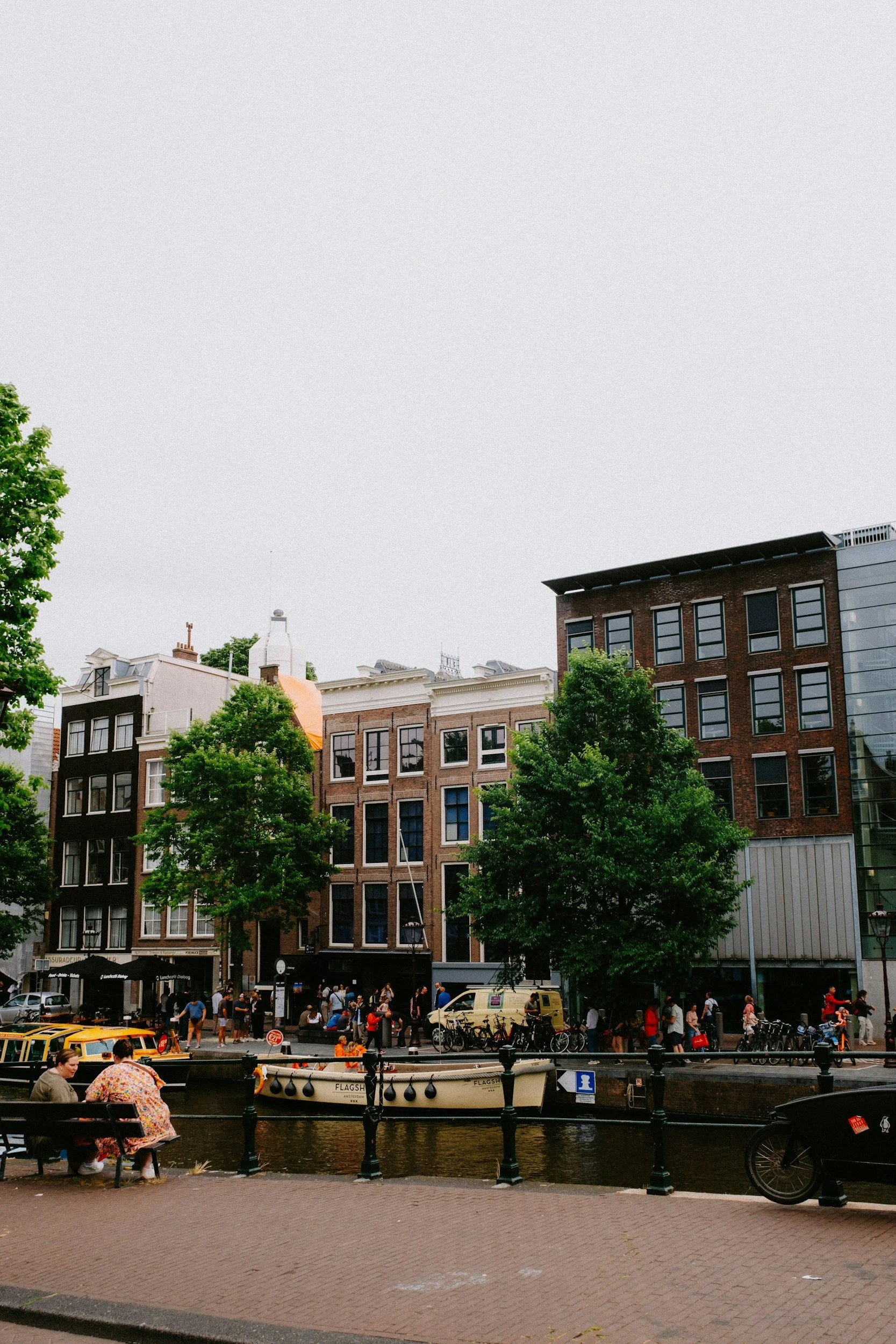
The Anne Frank House on the Prinsengracht is the house where the Frank family hid for two years before being denounced. Pre-book timed entry months ahead — specifically the Introductory Program tickets, which release in monthly batches and sell within hours. Same-day tickets are essentially impossible. One practical note: the booking system has occasional friction with American Express; have a Visa or Mastercard on file as backup before checkout.
I'm currently developing a co-hosted Jewish Heritage trip for 2026, and Amsterdam — alongside Vienna, Prague, Rome, and Paris — is on the early routing. Reach out if you'd like to be on the early-interest list.
Plan Amsterdam With Me
If you're thinking about Amsterdam as the start or end of a river cruise, as part of a multi-city European sweep, or as the slow three-to-five-night visit it deserves to be — that's exactly the kind of planning I do. A 30-minute discovery call is where it starts. No fee, no pressure. Just the city, your timeline, and what you actually want to feel when you wake up your first morning to the sound of the Westerkerk bells over the Prinsengracht.
Last updated: April 2026. I keep this guide current. If a hotel I recommend slips, a restaurant changes hands, or access to a site shifts, the page changes. Travel changes. The work doesn't stop when the page goes live.