
DESTINATION GUIDE
Vienna, the way I'd plan it
An advisor's guide — opinionated, useful, and built around what most itineraries miss.
About the Destination
Vienna is the European capital that quietly outperforms its own reputation. The brochure version is real — palaces, Sachertorte, the Opera, Klimt's The Kiss — and most American travelers leave on the third day having seen exactly that and not much else. The better Vienna sits half a block off the main route, in a kaffeehaus where the staff hands you the paper instead of pushing you out, in a museum's quiet wing nobody told you about, on a side-street where the Stolpersteine in the cobblestones make you look down before you look up at the building they were laid for. It's grand without being cold, walkable without being small, old in a way that feels lived-in rather than preserved. The trick is making sure your first visit doesn't get spent at the surface.
Most clients come to me asking about Vienna in one of three contexts: as a stop on a Danube river cruise, as the start or end of a longer Central European trip, or as half of a Vienna-Prague-Budapest grand-tour swing. The right way to plan it depends on which one you're doing — and on whether you want the city to be a parade of imperial highlights or something quieter and more your own.
Here's how I think about it:
Best time to visit
May–June and September for warm-weather Vienna; late November–December for the Christmas markets, which are the real reason to brave the cold. Avoid August — half the city is on holiday and the heat sits hard between the Ringstrasse buildings.
How long to stay
Three full days minimum if it's a standalone trip. Two days if you're tacking it onto a river cruise (and even then, build in a pre- or post-cruise night so you're not seeing Vienna in the few hours between docking and dinner).
Currency / Language
Euro. German is official; English is widely spoken in tourist-facing settings, less so in older cafés and outer districts. Grüß Gott is the local hello — using it earns small smiles.
How to get there
Vienna International Airport (VIE) is well-connected to the rest of Europe and direct from a handful of US gateways. The City Airport Train (CAT) gets you to the city center in 16 minutes. From other Central European cities, the train is almost always more pleasant than the flight.
One thing guides won't tell you
Vienna closes earlier than you'd think. Many of the great kaffeehäuser stop seating after 9 p.m. and the museums close on the early side. Plan dinner accordingly.
Why I Send Travelers Here
Because Vienna is one of the few European capitals that still rewards slowness. You can spend a whole morning in a single coffee house with a stack of newspapers and the staff will leave you alone — that's not a quirk, that's the entire point of Wiener Kaffeehauskultur, which UNESCO recognized as intangible cultural heritage. Because the Albertina alone justifies a half-day, and most travelers give it forty minutes between palace stops. Because the Christmas markets are the real article — refined, well-edited, vendors who actually make the things they're selling. Because the Jewish history here is layered, present, and not packaged for tourists, which makes encountering it feel like discovery rather than itinerary.
I send couples here for honeymoons that don't want to be loud. I send first-time river cruisers who'll spend a day here on a Danube sailing and need to know what to do with their afternoon-on-shore. I send slow travelers who want a base for three or four nights with day trips into the Wachau Valley.
Vienna is a city I keep returning to — most recently on a Danube sailing whose full trip report lives on this site. It's also a city I'm protective of on behalf of my clients. The standard Imperial-highlights itinerary leaves most of the actual city on the table, and a bad day in Vienna — too many palaces, the wrong café, the touristy dinner — is the easiest mistake to make and the easiest one to plan your way out of. Every recommendation below is anchored in the hotel relationships I lean on in this city, the in-motion practice that keeps me current — vendor visits, industry conferences, BDM check-ins — and a clear point of view about what Vienna does well and what it does for show.
Where I'd Anchor
Three neighborhoods cover almost any traveler's reason for being here:
Innere Stadt (the 1st District). The historic core, ringed by the Ringstrasse. Stay here if it's your first trip and you want to walk to most of the headline sights. Trade-off: it's the most touristy and the priciest. The Hotel Sacher is the address everyone knows, and earns it — old-world without being museum-like, with a hotel relationship that means amenities I can layer in. Hotel Bristol sits across from the Opera and is the quieter, slightly more grown-up choice.
Leopoldstadt (the 2nd District). Across the Danube Canal from the old town, this is the historic Jewish quarter and now one of the most interesting neighborhoods in Vienna — markets, parks (the Prater is here), and the kind of cafés locals actually go to. Better for a second visit, or for travelers who want their lodging to feel like a city rather than a museum.
Wieden (the 4th District). Just south of the old town, immediately walkable to the Naschmarkt. Hotels here trend smaller and design-forward. The pick if you want central without paying central prices.
For honeymoons and milestone trips I default to Park Hyatt Vienna, on Am Hof in the Goldenes Quartier — the quietest luxury block in the 1st District, walkable to almost everything you'd come to Vienna for. The hotel occupies a hundred-year-old former Austrian-Hungarian Bank building, the Arany Spa is built into the original gold vault, and the 143 rooms (41 of them suites) are among the largest in the city. Pairing the right suite category to your dates is the discovery-call conversation — rates and availability shift, and getting the room right at a property like this is worth the 20-minute call.
Want this stay? Start a discovery call — I quote rates, walk through the suite categories, and we'll figure out which version of the room fits your trip.
What I'd Do With Three Days
This is the version I'd send you if you asked me to plan it tomorrow. Adjust to taste.
Day One
The Hits, Done Right
Start at the Hofburg — but skip the Sisi Museum unless you're a true Habsburg romantic, and instead spend your time in the Imperial Apartments and the Spanish Riding School stables (the Lipizzaner morning exercises are open to the public on most weekdays and are a fraction of the price of the full performance). Walk west to the Naschmarkt, Vienna's open-air market, for an early lunch — the falafel stands and the small Austrian-Turkish counter restaurants are far better than the Sachertorte you'll have at the hotel later. If a croissant catches your eye on the way, eat it without irony: it's technically Viennese, shaped as a crescent by a baker celebrating the city's survival of the 1683 Turkish siege, and carried to France only later by Marie Antoinette. Spend the afternoon at the Albertina — the Dürer collection alone is worth the ticket, and most travelers underrate the rotating exhibitions. End the day with a proper kaffeehaus sit-down at Café Central or Café Sperl. Dinner at one of the Heuriger wine taverns in Grinzing if you have the energy for the tram out, or Plachutta in the city for the boiled-beef Tafelspitz the city is famous for.
Day Two
Quieter Vienna
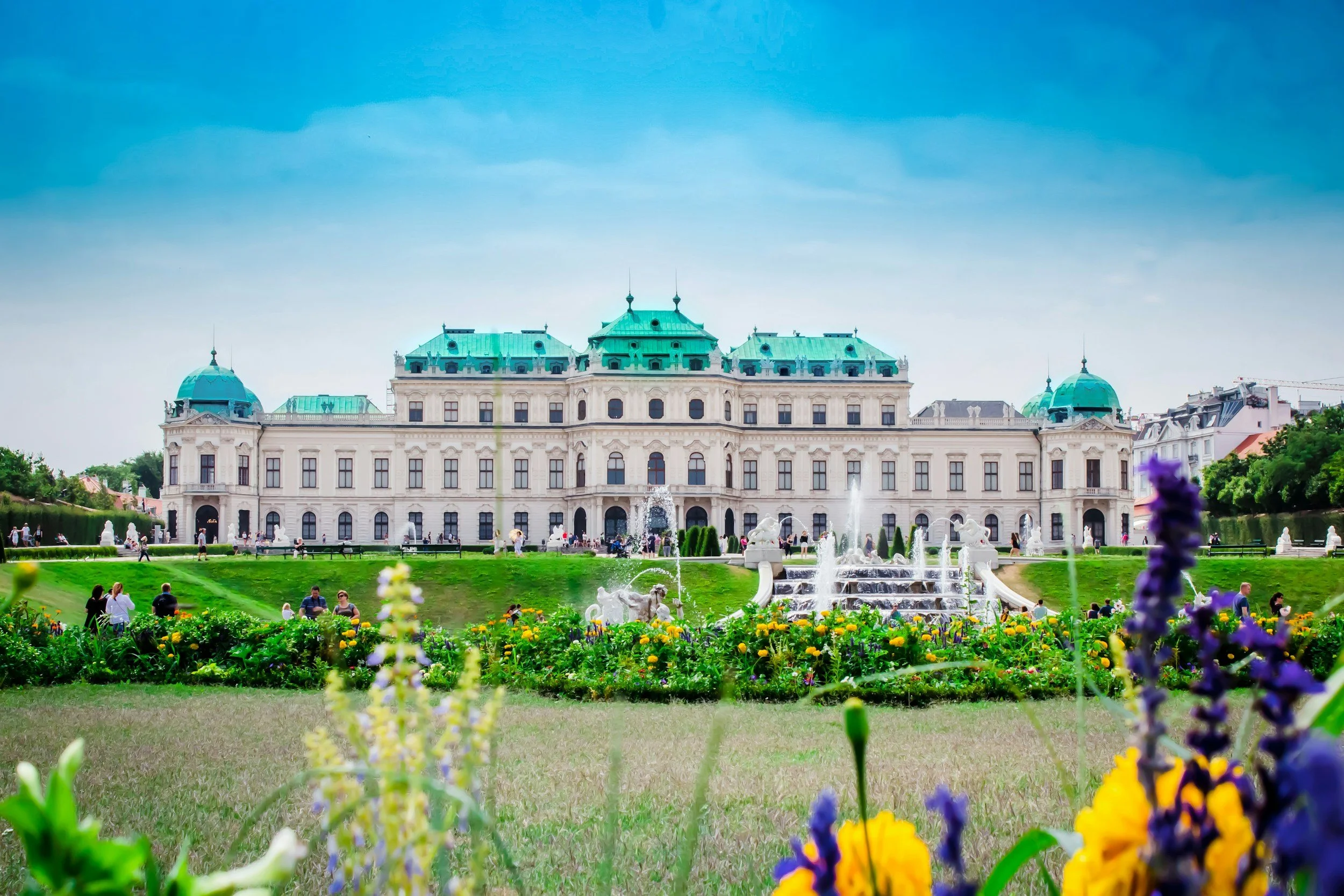
Morning at Schönbrunn Palace — book the Grand Tour ticket online ahead of time, go early, and walk the gardens after. Take a long lunch in the 7th district (Neubau) — design shops, independent cafés, none of the Innere Stadt crowds. Afternoon at the Belvedere for Klimt's The Kiss, which earns the hype. Walk the Karlsplatz and Karlskirche at golden hour. Dinner at Steirereck if you want a tasting menu that actually represents Austrian cooking; Skopik & Lohn in Leopoldstadt if you want something warmer and more neighborhood-feeling.
Day Three
The Vienna Most Travelers Miss
Walk to the Judenplatz Holocaust Memorial — Rachel Whiteread's concrete inverted library, sitting quietly in a square that has been Jewish Vienna's center since the Middle Ages. It doesn't announce itself. You have to look for it. It rewards the looking. Pair it with the Jewish Museum Vienna in the Palais Eskeles a few blocks away. Lunch at Café Prückel, which is everything Café Central tries to be without the line. Afternoon at the Leopold Museum in the MuseumsQuartier for the Schiele collection. If you have stamina, finish with a sunset hour at the Prater — yes, the Ferris wheel is touristy, yes you should ride it once.
Specific Things I'd Tell You
The Christmas markets are not interchangeable. If you're here in late November or December, the Rathausplatz market is the showpiece — the illuminated Neo-Gothic City Hall throws Gothic light across the ice rink below and the whole square smells like mulled wine and roasted almonds, and it stops you mid-step if it's your first time. The Schönbrunn Palace market is slightly less crowded and worth the short trip if you have time. The Spittelberg market in the 7th district is the locals' choice — narrower lanes, smaller crowds, better craft. You don't need to do all three. Pick two.
Sachertorte is fine. It's not the best cake in Vienna. The original at Hotel Sacher is worth doing once for the heritage of it. The chocolate cake at Demel is, in most people's honest opinion, better.
The morning exercises at the Spanish Riding School are the better ticket. The full evening performance is the show, and it's beautiful. The morning training sessions are the work — riders cuing, horses learning, the school doing what the school does on a normal day — and that's the more interesting hour. They're open to the public on most weekdays. Most travelers don't know.
The Naschmarkt is great in the morning. Skip it on weekends. The Saturday flea market is famous and overrun. Go Tuesday through Friday, before noon.
Buy the thing you're considering. Vienna's vendors trend toward fine foods, hand-thrown ceramics, glass ornaments, and Austrian craft spirits. I once walked past a hand-thrown ceramic bowl at a market and told myself I'd circle back. I didn't. I still think about it. The advice carries the lesson — when something Vienna catches you, that's the souvenir, buy it.
If you're in Vienna over a weekend with time for one art detour, Kirche am Steinhof. Otto Wagner's white Jugendstil church — gold-domed, mosaic-altared, stained-glass windows by Koloman Moser — sits on the grounds of a working psychiatric hospital out in the 14th district, which is why most travelers never see it. Visiting hours are weekend-only, Saturday afternoons and Sunday. It's one of the great art-nouveau buildings in Europe, and on most days you can have it almost to yourself. Bus 48A to the last stop.
What I'd Skip
The Sisi Museum, unless you're already a Habsburg-history reader. It's a lot of dresses and not enough story.
The horse-drawn carriages around the Ringstrasse. Tourist tax. Walk it instead — the Ringstrasse architecture rewards you on foot.
Eating dinner in the Innere Stadt unless you've made a reservation somewhere good. The casual Innere Stadt restaurants are mostly mediocre and overpriced. Either book ahead or walk three blocks out of the historic core.
The Mozart-costumed ticket sellers in front of the Opera. Whatever they're pitching, you'll find better online.
For River Cruisers
If you're seeing Vienna as part of a Danube sailing, you'll likely have one full day in port — usually a morning included excursion plus an open afternoon. My honest advice: take the included excursion (the Imperial highlights tour does an efficient job on the Hofburg and Ringstrasse so you don't have to), then spend your afternoon walking the Naschmarkt and finding your way to the Judenplatz Holocaust Memorial on your own. If your itinerary gives you an evening in port, the Christmas markets in late-fall sailings or a casual Heuriger dinner in any season are how I'd spend it.
If you're considering a Danube cruise that includes Vienna, the Rivers & Small Ships page covers how I think about which itinerary fits which traveler. The full Danube trip report — Budapest to Nuremberg on the AmaReina, Christmas markets edition — is the long-form version of what these sailings actually feel like.
For Travelers Following Jewish Heritage
Vienna's Jewish history is layered, present, and not always easy. The Judenplatz Holocaust Memorial — Rachel Whiteread's concrete inverted library, set in a square that was Jewish Vienna's center for six hundred years — is the moral center of the arc. The Jewish Museum Vienna frames the history. The Stadttempel synagogue on Seitenstettengasse — the only Vienna synagogue to survive Kristallnacht, because the Nazis worried that setting fire to it would spread to the residential apartment buildings it shares walls with — is the place where that history is most physically present. The older Jewish quarter around Leopoldstadt closes the arc. A half-day or full-day itinerary depending on how slowly you want to move through it.
Plan Vienna With Me
If you're thinking about Vienna as part of a larger Central European trip, a Danube cruise with quality time in port, or a slow honeymoon that uses Vienna as a base — that's exactly the kind of planning I do. A 30-minute discovery call is where it starts. No fee, no pressure. Just the city, your timeline, and what you actually want to see when you step off the train.
Last updated: April 2026. I keep this guide current. If a hotel I recommend slips, a museum changes hours, or a market moves, the page changes. Travel changes. The work doesn't stop when the page goes live.