The Danube Educates. The Rhine Enchants. The Douro Slows You Down. Here's How to Pick Your River.
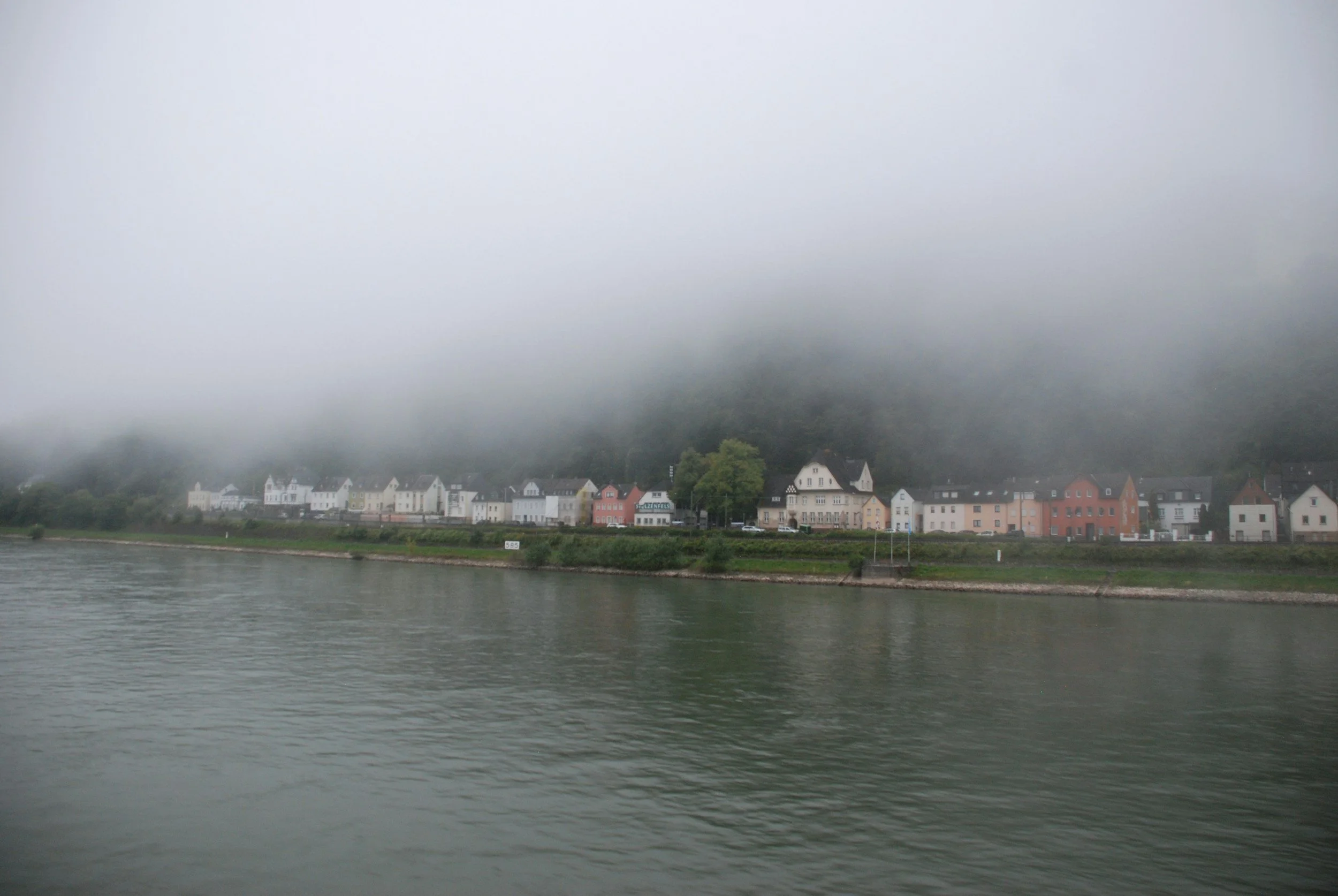
The wrong river for your personality is still a beautiful cruise. The right river — for the way you actually travel — is a revelation.
I tell clients some version of this almost every time we talk about river cruising. The ships are good. The food is solid. The cabins are comfortable. The wrong river will still send you home with a thousand photographs and a story you're glad to tell. That's the floor.
The right river is a different kind of trip entirely. That's the conversation worth having before you book.
This is the framework I use to match people to rivers. The three great European routes — the Danube, the Rhine, and the Douro — aren't interchangeable. They're three fundamentally different trips that happen to share a category, and they reward three fundamentally different travelers.
A note on where I'm coming from. I spend the year in motion — at industry conferences, on the advisor-side scouting sailings that put me onboard the ships, and in steady working contact with the people who run the advisor programs at the major river-cruise lines. That's the practice the recommendations below are coming out of: AmaWaterways, Uniworld, Viking, Avalon, Tauck — I'm well-versed in what each one does well, where each one fits, and which traveler each one is for. My most recent firsthand sailing was the Danube on the AmaReina in November 2024, the Holiday Markets edition (Budapest to Nuremberg) — the full trip report is on the site if you want the long-form version. The Rhine and the Douro I know the way I know most of my work: through the operators I sit with, the clients I've sent and debriefed, and the conversations I keep having about which version of which sailing fits which traveler. I'm a traveling travel agent — in motion, in the field, in the rooms where this work happens — and the version of each of these rivers I'd put you on is the version I've been refining out loud for the better part of two years.
Here's how I think about each one, and how I'd help you choose.
The Danube — The Educator
The Danube is the most versatile of the three. It's where I send first-time river cruisers, multi-generational families, and travelers who want variety without surrender — people who don't yet know exactly what they're looking for, and who'll figure it out somewhere between Vienna and Regensburg.
It's also the most-traveled of the three rivers, and the one with the broadest range of operator choice. AmaWaterways, Uniworld, Viking, Avalon, and Tauck all run strong programs here, and each has its own ship culture, food program, and excursion philosophy. There isn't a single "best" line — there's a best line for you, and figuring out which one is part of what we work through together on the call.
A standard sailing runs Budapest to Nuremberg or Passau (or the reverse), and each port is its own city, distinct enough that you can feel the borders shift. Vienna is imperial and grand — palaces, orchestras, Wiener Kaffeehauskultur that UNESCO actually recognized as intangible cultural heritage. Budapest is romantic and a little mysterious — Belle Epoque cafés, Ottoman-era thermal baths, the second-largest synagogue in the world, the Pest skyline lit at night across the Chain Bridge. Bratislava is smaller, less crowded, with a castle overlooking the river. Melk is a Benedictine monastery on a rocky promontory whose library was designed specifically to make people believe in something. Passau is fairy-tale medieval, a three-river town with one of the largest pipe organs in the world. Regensburg is the city that doesn't try to impress you, and is precisely why it does — buy your bratwurst from the Historische Wurstkuchl, which has operated continuously since the 12th century, and eat it on the steps by the river.
And then there's Nuremberg — where my own sailing ended, and the city I'd argue is most undersold by the river-cruise marketing. The Christkindlesmarkt has run continuously since the 1600s, and the Hauptmarkt setting on a clear cold night is undeniably impressive. But the city isn't only its market. The Documentation Center next to the Nazi Party Rally Grounds is one of the most thoughtfully constructed historical museums I've ever encountered — it doesn't let you look away, but it also doesn't exploit. Stolpersteine — small brass stumbling stones, each one engraved with the name of someone the city lost — sit in the cobblestones across the old quarter. There's a small LGBTQ+ memorial near the medieval walls, easy to miss if you don't know to look for it. And the bratwurst is famous for a reason; eat it the traditional way, three on a roll, with mustard. The whole city wears its history in the open — grandeur and grief side by side — and that openness is what makes it the right note for the trip to land on.
If your sailing disembarks in Nuremberg, do not race to the airport. Give the city a full day. Better still, build in a post-cruise night and fly out the following morning. Nuremberg is the punctuation mark of this trip, and it deserves more than ninety minutes between disembarkation and departures.
The Danube teaches you history the way a museum does, but better — because you're living in the spaces where the history happened.
If you go in late November or December, you get the Danube at its most enchanting. The ports transform into Christmas markets. The light goes crisp. The Glühwein actually warms you. The crowds thin. You board the ship and the work of travel is done — you'll see markets and drink local wine and come back to a warm cabin where someone has already turned down the duvet. It's the version that converts cruise skeptics, and I'd know — it converted me.
The Danube is also excellent in spring (April–May) and early fall (September–October). The weather is perfect, the flowers or golden light depending on the season, and far fewer ships choking the locks than you'll find in peak summer.
Who's this for: First-time river cruisers. Multi-generational families. Travelers who want intellectual engagement — history, architecture, music, museums. People who like structure and variety. Anyone who wants to say "I took a river cruise in Europe" and have that mean something substantial.
The Rhine — The Romantic
The Rhine is the most scenic of the three. It's also the shortest and the fastest — you cover more ground in less time. That's not a flaw if you understand the river's nature: the Rhine is about the landscape, not the destinations.
A small personal disclosure on this one. I lived on a U.S. military base in the Rhineland for a few years of grade school, and the Rhine — its valleys, its weather, the silhouette of castles against winter light — is a landscape I formed first impressions in. That doesn't change how I plan a Rhine sailing for a client (it's still a match question), but it means I have a particular soft spot for what this river does in spring, and an old familiarity with the towns and weather that I can't quite get from a brochure.
The Rhinegorge — a UNESCO World Heritage corridor running roughly between Mainz and Koblenz — is one of the most dramatic river landscapes in the world. Steep banks. Castles clinging to hilltops every few kilometers. Vineyards carved into the mountainsides at impossible angles. The river narrows at the Lorelei rock, the light changes, and you're watching a medieval fantasy novel unfold outside your cabin window. I'd send you to the upper deck with a coffee and tell you to stay there until the gorge ends — the rest of the cruise can wait.
At the northern end, you're in the Netherlands. Amsterdam is magnificent — canals, museums, bicycles, the feeling that you've stepped into a Vermeer. Tulip season — late April into early May — is when the postcards actually deliver: flower fields and windmills, the whole brochure unfurled along the riverbank. Further south, you're in Germany's Rheingau wine country — the villages of Rüdesheim and Assmannshausen sit right along the Rhine itself, where Riesling has been made by some of the same families for generations. The wine here is crisp, aromatic, and meaningfully different from anything else you'll drink that week.
A quick clarification, because it trips a lot of first-time clients up: the Mosel valley is a tributary of the Rhine — it joins the main river at Koblenz — and it has its own postcard-perfect Riesling country (Bernkastel-Kues, Cochem, Trier). A standard Rhine sailing (Amsterdam to Basel, say) doesn't go up the Mosel. If the Mosel is what's calling you, you want a specific Rhine & Mosel combo itinerary — several lines run one. Ask me on the call.
One honest thing about the Rhine: it moves faster than the Danube, which means your port days are shorter. You spend more time on the ship moving through the gorge. Some travelers find this magical — the river is the experience, the deck is the destination. Other travelers want more time in each city. Know which one you are before you book, because the Rhine punishes the wrong expectation.
Who's this for: Romantics. People who want to sit on deck and watch scenery unfold. Wine travelers, especially Riesling enthusiasts. Photographers. Anyone whose mental image of Europe involves castles and vineyards. First-time cruisers who want the experience to feel like a storybook.
One pacing note: the Rhine pairs unusually well with two or three pre- or post-cruise nights in Amsterdam or Lucerne — the river's compressed schedule leaves you wanting one city to actually live in. Don't fly home the morning of disembarkation. You'll regret it.
The Douro — The Intimate
The Douro is the smallest of the three — the river itself is narrower, the ships are smaller, the ports are towns rather than cities. That's not a limitation; it's the entire point. The Douro isn't competing with the Danube for variety or the Rhine for drama. The Douro is about depth.
You go to the Douro to understand wine. Real understanding — not tasting-room-bingo. You stay docked in one village for a day and a half and actually get to know a landscape. You visit quinta estates — wine farms where the winemaker is the person pouring — and walk terraced vineyards so steeply carved they feel almost impossible (they should: they're UNESCO-protected because they represent two thousand years of human intention on land). You eat petiscos and bacalhau and slow lunches built from what's growing within ten kilometers of the table. You arrive in Porto at the end and spend an afternoon in the port wine lodges across the river in Vila Nova de Gaia, learning the difference between vintage, tawny, and LBV from someone who actually cares whether you remember.
The Douro is about presence. It's about patience. It's about understanding that a single place, experienced slowly, teaches you more than six places experienced quickly. If that sentence makes you restless rather than relieved, this isn't your river.
Timing is non-negotiable, and not in the way most travelers expect. September and October — harvest — is when the valley is most alive: the light goes golden, the terraces hum with activity, and you can taste new wines at the quintas where they were made the week before. May and June are quieter and beautiful in their own way. From late November through March, the major river cruise lines actually shut down Douro operations entirely — there is no January sailing to book even if you wanted one, and the quintas close for maintenance behind them. Plan around the harvest window or the late-spring shoulder. Full stop.
For the post-cruise extension I'd default to a night or two at a working quinta — Quinta Nova de Nossa Senhora do Carmo for the historic-estate experience, Six Senses Douro Valley for the contemporary-luxury version. Which one fits which traveler is a discovery-call conversation.
Who's this for: Wine travelers who want education, not just tasting. People who know how to slow down — or want to learn. Travelers who'd rather have four profound experiences than eight shallow ones. Couples looking for intimacy without theater. Anyone in the second half of their travel life who's already done the checklist and is ready for something different.
Three Questions That Tell You Which River Is Yours
This is more or less the conversation I have on the discovery call. You can answer these for yourself in about ninety seconds.
Do you want to see a lot of different places quickly, or fewer places more deeply? The Danube and Rhine give you variety — six or seven ports in a week. The Douro gives you depth — fewer ports, longer in each, the same valley unfolding slowly outside your window.
Are you interested in history and architecture, in dramatic landscape, or in wine and food as a whole tradition? Danube = history. Rhine = landscape. Douro = wine and place inseparable. None of the three is exclusive — there's wine on the Danube and history on the Douro — but the center of gravity is different on each river, and matching it to your interests is most of the work.
Can you actually sit still, or do you need to be doing something? The Danube and the Rhine give you a lot of shore time and active excursions — bike rides, hikes, walking tours. The Douro rewards time on the ship, on deck, doing nothing but watching the terraces shift in the light. Be honest with yourself here. The wrong answer to this question is the most common reason people end up on the wrong river.
A couple of follow-up questions help me sharpen the recommendation: Is this your first European river cruise, or have you done one before? What time of year are you flexible? Are you traveling solo, as a couple, or with family? But ninety percent of the call is the three above.
What Most Comparison Posts Get Wrong
A few honest things, since the internet generally doesn't say them.
The "best" river depends on you, not on the river. Most lists you'll find online are ranking by Instagram-friendliness or by which line spent more on SEO that quarter. Ignore them. The right river is a match question, not a quality question.
The cruise line matters at least as much as the river. Each major operator has its own personality — different ship design, different food program, different excursion philosophy, different rhythm of the day. None of them is the best line, and pretending one is would be doing you a disservice. The right operator is the one whose version of the river fits the way you want to travel, and that pairing — which line on which river — is part of what we work through together.
Cabin choice on a river ship is a real decision, not a marketing one. River ships are smaller than ocean ships, and the difference between a French balcony, a twin balcony, and a suite is an actually different daily experience. We'll talk about it.
You don't have to pick a single river. A growing number of travelers do a Rhine sailing one year and a Douro the next. Or pair a Danube with a Provence sailing the following season. River cruising tends to convert people, and converted people repeat. Plan accordingly.
The Honest Truth
The right river is the one that matches your personality.
If you love history and architecture and want intellectual engagement — take the Danube. You'll come home full of understanding, with a Christmas-market ornament on the tree and a soft spot for Hungarian Tokaji.
If you're a romantic who wants to sit on deck and watch castles and vineyards unfurl past the window — take the Rhine. You'll come home enchanted, with a stack of photographs that look almost staged.
If you actually know how to slow down — if you want to taste wine like a student rather than a tourist, if you'd rather have four profound experiences than eight shallow ones — take the Douro. You'll come home changed, and probably already planning the next one.
The wrong river? You'll have a lovely trip. The right river? You'll understand why people do this over and over.
That's the conversation worth having on the call.
One more thing — these three are the great European rivers, but they're not the whole river-cruise map. The Mekong through Cambodia and Vietnam, the Nile in Egypt, the Magdalena through Colombia, the Chobe in southern Africa, the Mississippi at home — each is a different category of trip, with operators, seasons, and rhythms of its own. They deserve their own post. (Coming.)
Ready to figure out which river is calling you?
Book your free discovery call →
I'll ask you the three questions above (and the follow-ups), pull live availability across the lines I work with, and help you find the river that matches not just where you want to go but how you actually want to travel. The first conversation is free and comes with no pressure whatsoever.
Last updated: April 2026. I keep this guide current. As river cruise seasons shift and operators refresh their fleets and itineraries, the page changes.